
Contents
- The 6.3-inch label sits on two different bodies
- One UI exposes more controls; Pixel keeps Google in the default path
- The update clocks start from different sentences
- Optical reach is 3x on the S26 pages and 5x on the Pixel 10 page
- Battery and charge claims stay inside the test that printed them
- Storage starts higher on the US S26 page, and one column prints usable space
- Chip, SIM, and radio rows have to match the box
- Which phone fits the day you repeat
A wrong Galaxy S26 or Pixel 10 regional page costs the chip, SIM layout, and bands printed for a different market. Choose the Galaxy S26 when the published 167 g body and One UI controls match the day you repeat, and choose the Pixel 10 when Tensor G5, Pixelsnap, and a 5x telephoto match that day. Confirm the model number against the Samsung or Google page for your market before you treat either sheet as the phone in the box.
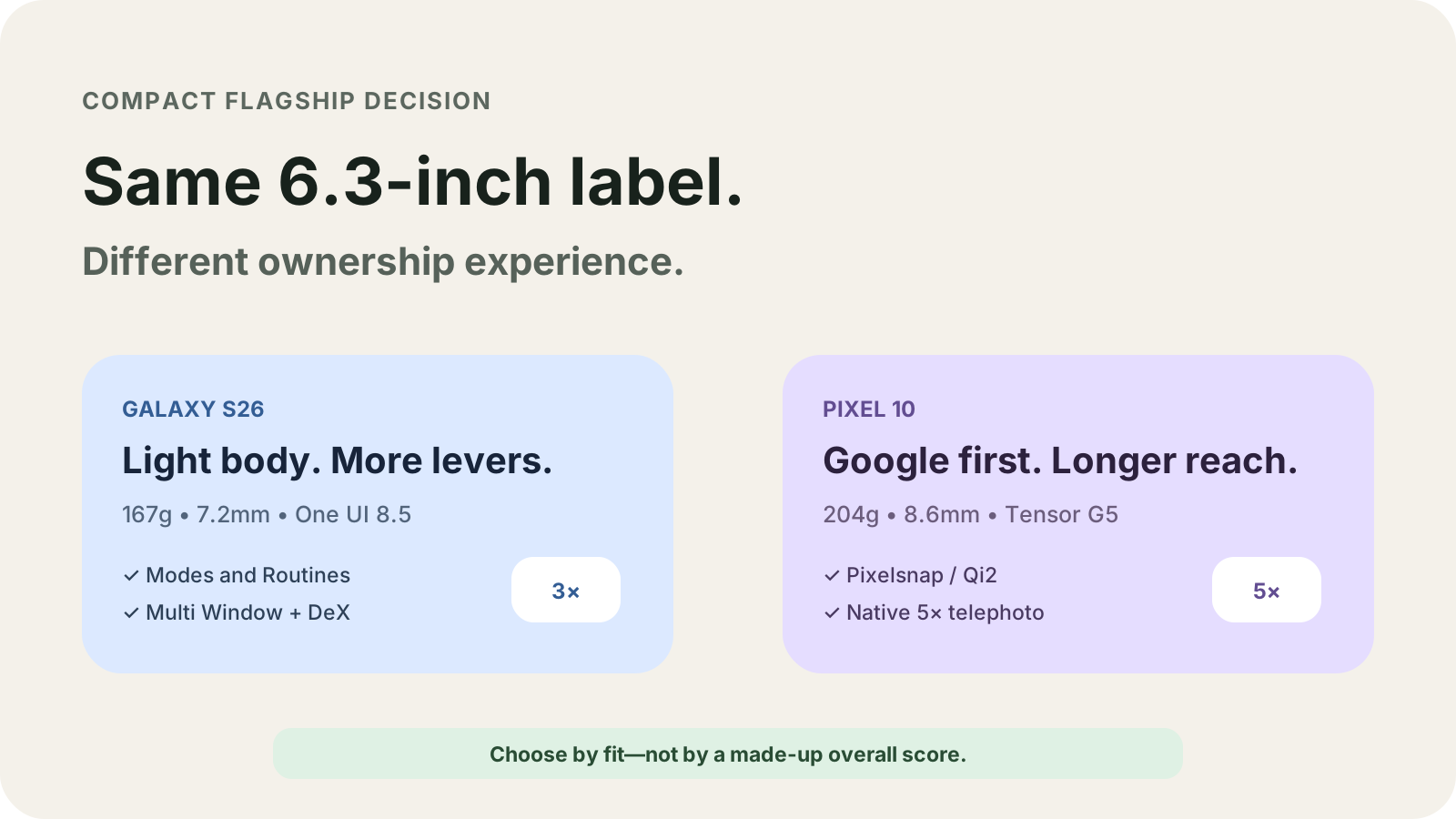
Galaxy S26 and Pixel 10 both carry a 6.3-inch display label on the pages checked 18 October 2026, and the fit splits on body, optical reach, storage floor, and which chip name that page prints. Samsung’s US page lists the Galaxy S26 at 7.2 mm and 167 g, with a 4,300 mAh battery, 12 GB, and 256 GB or 512 GB. Google’s Pixel 10 specs page lists a 6.3-inch Actua display, a typical 4,970 mAh battery, 12 GB, and 128 GB or 256 GB of storage. The table captioned Pixel 10 tech specs prints 152.8 × 72.0 × 8.6 mm and 204 g. Samsung’s US FAQ names Exynos 2600 for the Galaxy S26 and S26+. The US newsroom table names Snapdragon 8 Elite Gen 5 for Galaxy on the S26 and S26+ block. Use the row that matches the model number in your market. This page sits with the other Android buying guides.
Scroll horizontally to view all table columns.
| Input or item | Typical value or source | Why it matters |
|---|---|---|
| Body | Galaxy S26: 149.6 × 71.7 × 7.2 mm, 167 g, on the Samsung US page and the Korea 256 GB column. Pixel 10 tech specs table: 152.8 × 72.0 × 8.6 mm and 204 g. Pixel 11 heading: 152.8 × 72.0 × 8.6 mm and 197 g. Pixel 11 Pro heading: 152.7 × 71.9 × 8.4 mm and 204 g. [4] [5] [2] | Pocket fit uses the heading for that model. |
| Display label | Both pages print 6.3 inches as a full-rectangle diagonal. Samsung’s newsroom also prints 6.1 inches after rounded corners for the S26. Google prints 160 mm for the Pixel 10 rectangle. [6] [2] | The shared inch label hides a different body. |
| Rear camera reach | Galaxy S26: 50 MP wide, 10 MP telephoto, 12 MP ultrawide, with 3x optical zoom on the US page, Korea column, and newsroom. Pixel 10: 48 MP wide, 13 MP ultrawide, 10.8 MP telephoto with 5x optical zoom. [4] [5] [1] | Distant subjects follow the optical factor printed for that lens. |
| Battery, typical | Galaxy S26: 4,300 mAh. Newsroom rated minimum: 4,175 mAh. Pixel 10: 4,970 mAh typical, 4,835 mAh minimum. [4] [6] [1] | Capacity is a cell figure. Runtime follows the test named on that page. |
| Storage | Galaxy S26 and S26+: 12 GB memory with 256 GB or 512 GB on the US page. Pixel 10: 12 GB RAM with 128 GB or 256 GB. [4] [1] | The smaller starting option fills first with offline photos and video. |
| Processor name | US FAQ: Exynos 2600 for S26 and S26+. Newsroom S26/S26+ block: Snapdragon 8 Elite Gen 5 for Galaxy. Korea 256 GB column: Deca-Core at 3.8 GHz, 3.26 GHz, 2.76 GHz, with no marketing name. Pixel 10: Google Tensor G5. [4] [6] [5] [1] | Two Samsung pages currently print two names. The box has one of them. |
Scroll horizontally to view all table columns.
| Path | Published baseline | Dominant failure mode | Prevention |
|---|---|---|---|
| Galaxy S26 | 167 g, 7.2 mm, 3x optical, 256 GB or 512 GB, Android 16 and One UI 8.5 on the newsroom OS row | Reading Exynos 2600 and Snapdragon 8 Elite Gen 5 for Galaxy as one chip, or assuming DeX on PC because the S26 series is on the cable list | Match the chip line to the SKU page, and use the DeX path Samsung still lists for the S26 series |
| Pixel 10 | Pixel 10 tech specs table: 204 g, 8.6 mm, 5x optical, 12 GB, 128 GB or 256 GB, Tensor G5, launched with Android 16 | Buying US model GLBW0, dual eSIM, for a plan that needs the ROW nano-SIM model GK2MP | Match the model code and SIM row under the Pixel 10 heading to the carrier |
Scroll horizontally to read the labels in this diagram.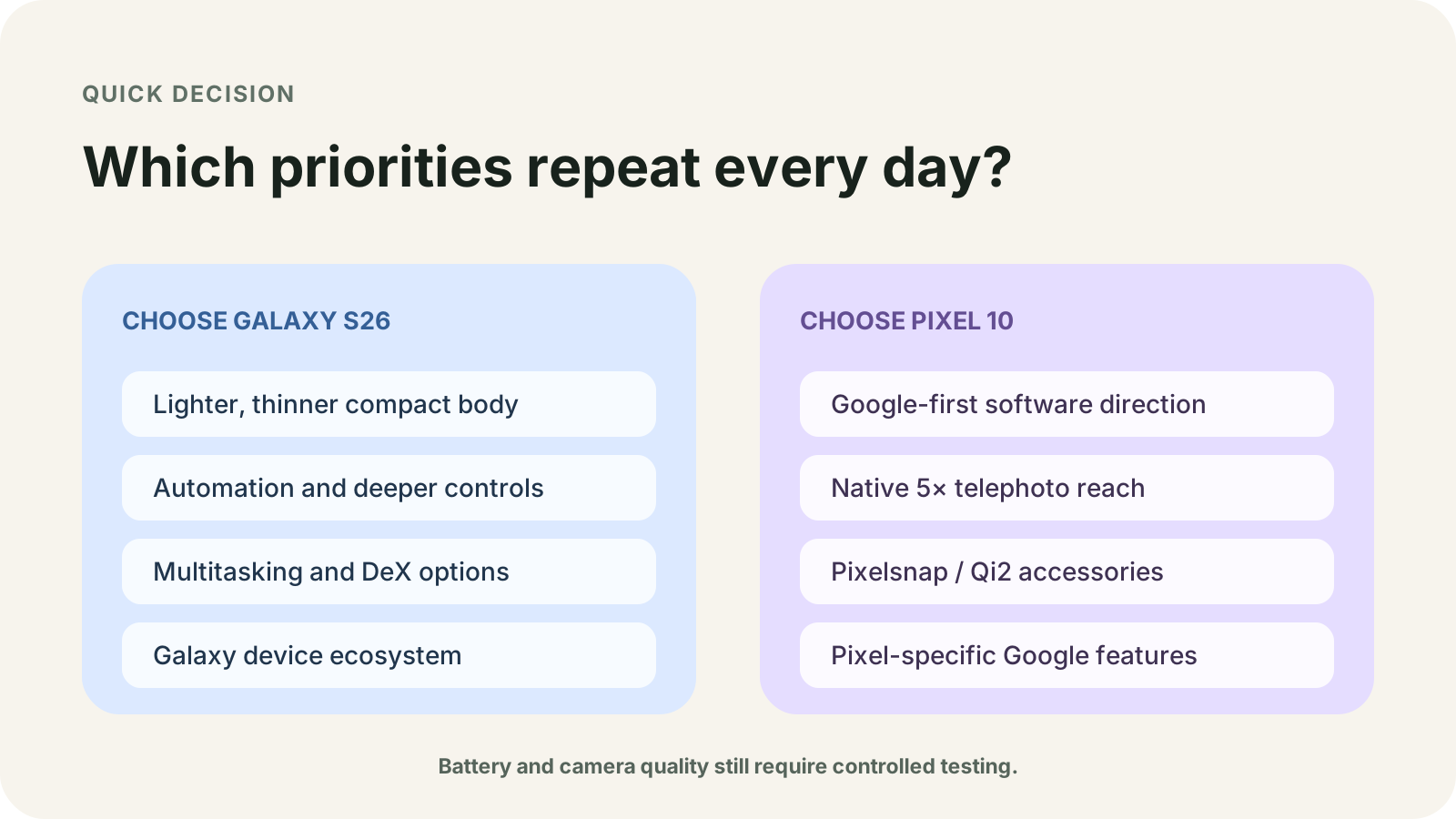
The 6.3-inch label sits on two different bodies
The Galaxy S26 body on the US page and the Korea 256 GB column is 149.6 × 71.7 × 7.2 mm and 167 g. The table captioned Pixel 10 tech specs prints 152.8 × 72.0 × 8.6 mm and 204 g together. The Pixel 11 heading prints 152.8 × 72.0 × 8.6 mm and 197 g. The Pixel 11 Pro heading prints 152.7 × 71.9 × 8.4 mm and 204 g. Samsung’s newsroom prints the same S26 Sub6 figure, 71.7 × 149.6 × 7.2 mm and 167 g. [4] [5] [6] [2]
Worked example. Outer rectangular envelope V = height × width × thickness, using the published outer dimensions and ignoring corner radii.
V_s26 = 149.6 × 71.7 × 7.2 = 77,229.504 mm³
V_pixel = 152.8 × 72.0 × 8.6 = 94,613.76 mm³, from the Pixel 10 tech specs table, not the Pixel 11 block that prints the same millimeters with 197 g.
Envelope ratio = 94,613.76 / 77,229.504 = 1.225
Mass gap = 204 - 167 = 37 g. Thickness gap = 8.6 - 7.2 = 1.4 mm.
Rule of thumb: If published body mass is under 180 g on the heading for your exact model, prioritize the Galaxy S26 body for a pocket, because those Samsung pages print 167 g and 7.2 mm while the Pixel 10 tech specs table prints 204 g and 8.6 mm. A case consumes part of that 1.4 mm gap, so compare both phones in the case you will keep on them.
Scroll horizontally to read the labels in this diagram.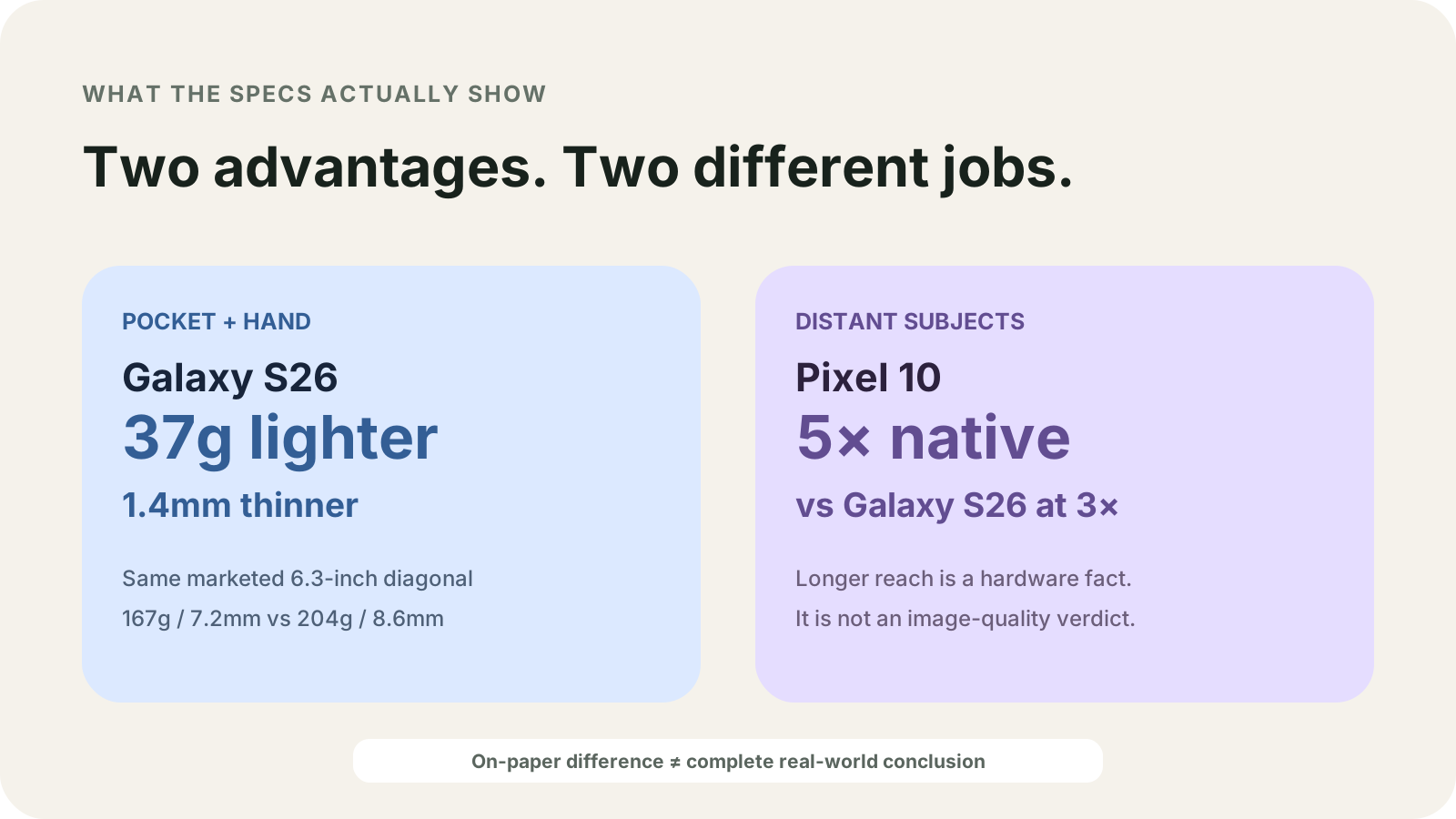
One UI exposes more controls; Pixel keeps Google in the default path
The newsroom OS row for the Galaxy S26 and S26+ prints Android 16 and One UI 8.5. Samsung’s Modes and Routines page describes condition-based actions on a Galaxy phone or tablet, and it ties availability to the device and software version. The Multi window page says split screen and app pairs work on non-foldable Galaxy phones as well as foldables, and it says some apps do not support split screen. [6] [7] [8]
Samsung’s DeX FAQ lists the S26 series for a DeX cable or HDMI cable and for wireless DeX to a TV or monitor. The same page says DeX on PC is unsupported on the Galaxy S26 series, and it points that job to Link to Windows. It also says DeX Pad and DeX Station are unsupported on Android 16 and One UI 8. The Korea 256 GB column lists Samsung DeX support as available for that SKU. [9] [5]
The Pixel 10 hardware page says the phone launched with Android 16 and lists Gemini, Gemini Live, and the other Google AI rows on that sheet. Feature rows on that page carry country and language limits in the footnotes. The day-to-day split between the two software stacks is covered in how Pixel Android and Samsung One UI differ in daily ownership. [2]
The update clocks start from different sentences
Google’s hardware page prints “7 years of OS, security, and Pixel Drop updates” on the Pixel 10 spec block. The separate Pixel update page says Pixel 8 and later phones get 7 years of OS and security updates starting when the device first became available on the Google Store in the US, and it includes Pixel Drops in that window. Neither page prints a calendar end date for the Pixel 10 on the sheets saved here. [2] [3]
Samsung’s newsroom footnote says the Galaxy S26 series gets seven generations of OS upgrades and seven years of security updates from the global launch date. The Korea 256 GB column prints a security-update deadline of 28 February 2033, and it prints February 2026 as that model’s release month. Those are the dates and sentences on the pages. How to read an Android update promise is the next check when two brands use the word “seven” with different start lines. [6] [5]
Optical reach is 3x on the S26 pages and 5x on the Pixel 10 page
Samsung’s US camera block for this lineup lists a 12 MP ultrawide at F2.2, a 50 MP wide at F1.8, and a 10 MP telephoto at F2.4, and it prints zoom from 0.6x to 3x optical plus up to 30x digital. The Korea 256 GB column prints rear pixels as 50.0MP + 10.0MP + 12.0MP, apertures F1.8, F2.4, F2.2, and zoom as 3x optical, a 2x step at optical quality, and up to 30x digital. The newsroom S26 camera rows match that shape: 50 MP wide, 12 MP ultrawide, 10 MP 3x telephoto. The front camera on the Korea column and the newsroom selfie row is 12 MP. [4] [5] [6]
Google’s Pixel 10 specs page summarizes the rear system as a 48 MP wide camera, a 13 MP ultrawide, and a 10.8 MP 5x telephoto with optical image stabilization. The hardware page’s detailed rows match that: 48 MP wide at f/1.70 and 82 degrees, 13 MP ultrawide at f/2.2 and 120 degrees, and 10.8 MP telephoto at f/3.1, 23 degrees, and 5x optical zoom. The front camera on both Google pages is 10.5 MP. [1] [2]
Rule of thumb: If native optical zoom exceeds 3 on the page for the phone in your hand, prioritize the Pixel 10 for distant subjects, because Google prints 5x optical on the Pixel 10 telephoto and Samsung prints 3x optical on the Galaxy S26 telephoto. Image quality stays a separate measurement from that optical factor.
Battery and charge claims stay inside the test that printed them
The Galaxy S26 typical battery is 4,300 mAh on the US page, the newsroom S26 column, and the Korea 256 GB column. The newsroom footnote sets the rated minimum at 4,175 mAh for the Galaxy S26 under IEC 61960 and says the typical value is a laboratory average. The Korea column also prints a video-playback row of up to 30 hours. [4] [6] [5]
The Pixel 10 specs page prints a typical 4,970 mAh battery and a 4,835 mAh minimum, plus a “24+ hour battery life” line and up to 100 hours with Extreme Battery Saver. Google’s footnote says battery life depends on what the phone is doing and points the test method to g.co/pixel/battery-tests. The 30-hour Samsung video row and the 24-hour Google line are separate protocols. What to check when an Android phone drains faster than its capacity suggests is the practical follow-up once the phone is in use. [1] [2]
Wired charging stays on its own line too. Google prints up to 55% in about 30 minutes with a 30W-or-higher USB-C PPS charger sold separately, and the hardware footnote bases that rate on the Google 45W USB-C charger in a wall outlet. The newsroom S26 column prints Super Fast Charging up to 25W, up to 55% in around 30 minutes with a 25W adapter and a 3A USB-C cable, with the adapter sold separately. The same table’s S26+ column is a different claim: up to 45W and up to 69% in around 30 minutes. Wireless charging on the Pixel 10 page is Pixelsnap, Qi2-certified, up to 15W. The newsroom S26 column prints fast wireless charging up to 15W. [1] [2] [6]
The charger is a separate purchase on both of those charging lines. That is the direct add-on cost beside the phone. A case is the other one: it adds thickness the 1.4 mm gap does not include.
Storage starts higher on the US S26 page, and one column prints usable space
Samsung’s US page says the Galaxy S26 and S26+ come with 12 GB of memory and a choice of 256 GB or 512 GB. Google’s specs page lists the Pixel 10 at 128 GB with 12 GB RAM and 256 GB with 12 GB RAM. Google’s note says those storage figures are capacity before formatting. It does not print the formatted number, so that cell stays blank here. [4] [1]
Worked example. On the Korea 256 GB column, labeled storage is 256 GB and available storage is 224.8 GB.
Reserved = 256 - 224.8 = 31.2 GB
That 31.2 GB is the gap Samsung prints for that column, after preloaded software. It is a property of that Korea listing. How to choose between 128 GB and 256 GB walks through what fills the smaller floor. [5]
Chip, SIM, and radio rows have to match the box
Samsung’s US FAQ states that the Galaxy S26 and S26+ run on the Exynos 2600. The newsroom specification table, under the Galaxy S26 and Galaxy S26+ headings, prints Snapdragon 8 Elite Gen 5 for Galaxy on the AP line. The Korea 256 GB column prints a Deca-Core CPU at 3.8 GHz, 3.26 GHz, and 2.76 GHz and does not print either marketing name. Pixel 10’s processor line is Google Tensor G5 on both the specs page and the hardware page, with a Titan M2 security coprocessor. [4] [6] [5] [1] [2]
SIM layout is also a market row. Google’s hardware page prints dual eSIM for the US, model GLBW0, with two active eSIMs and storage for 8 or more. The ROW row is a single nano-SIM plus eSIM, model GK2MP, and the Japan row is model GL066. The Korea Galaxy S26 256 GB column prints Dual-SIM as SIM 1 + eSIM or dual eSIM. UWB is another split on the saved Samsung pages: that Korea column prints UWB as no, while the newsroom connectivity lines include UWB. Leave the UWB cell unresolved until the page for your SKU prints one answer. [2] [5] [6]
Both phones print IP68, with limits attached. Samsung’s US durability answer says the rating covers accidental spills and everyday mishaps, and the newsroom footnote describes a lab condition of up to 1.5 meters of freshwater for up to 30 minutes and says the resistance is not permanent. Google’s hardware footnote says the Pixel 10 is designed to meet IP68 under IEC 60529 when it leaves the factory, that the resistance is not permanent, and that liquid damage voids the warranty. The failure mode is treating the IP68 line as permission to submerge the phone after wear. The prevention is to read that footnote before water is part of the plan. [4] [6] [2]
Scroll horizontally to read the labels in this diagram.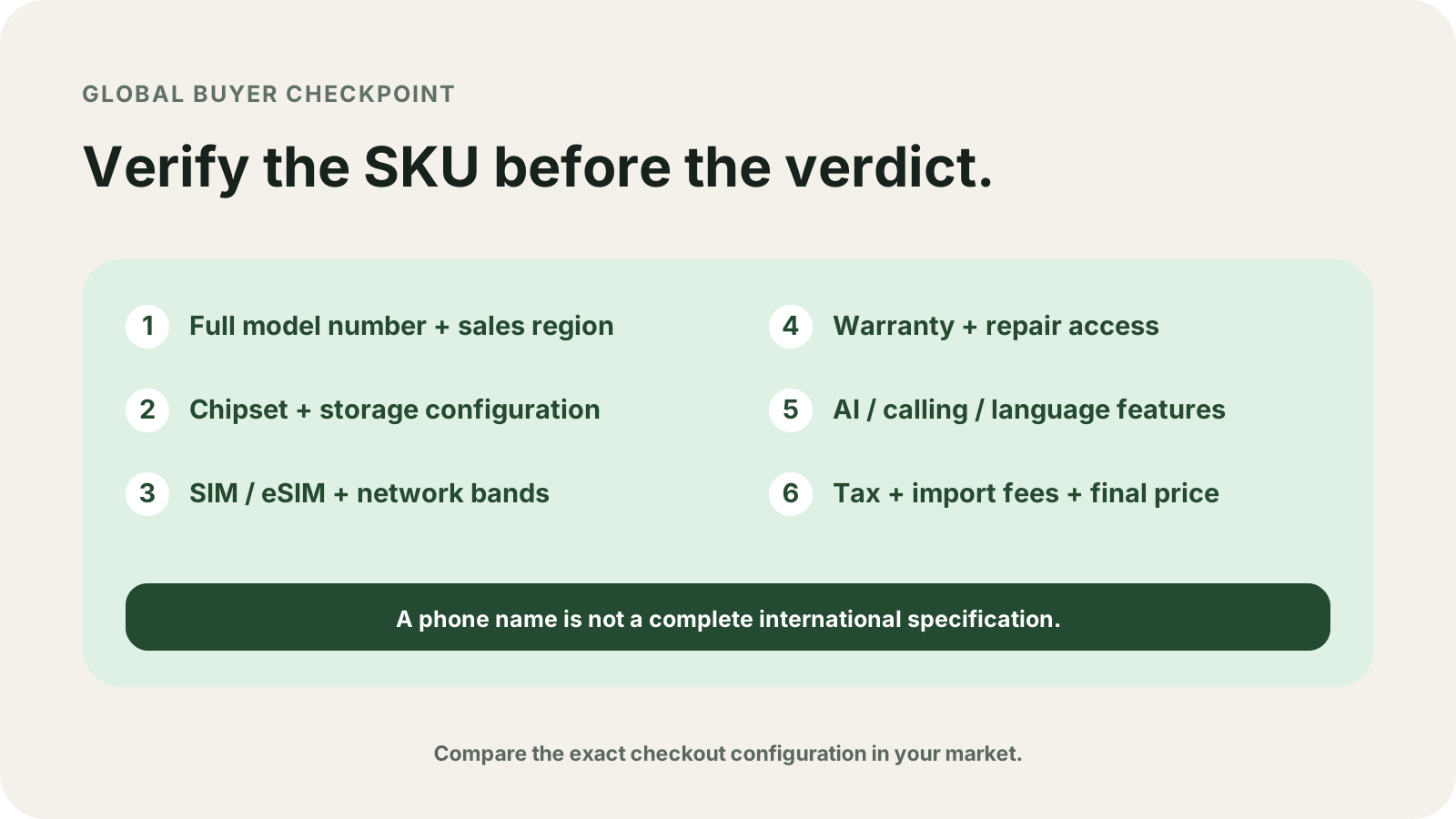
Before you pay, collect the row that the page actually prints:
- Full model number and sales region, including Pixel GLBW0, GK2MP, or GL066 when that is the hardware-page match.
- Processor name on that market’s page, kept as printed when two Samsung pages disagree.
- Storage option and, when the page prints it, available capacity after software.
- SIM type: dual eSIM, nano-SIM plus eSIM, or the Korea Dual-SIM pair.
- The band list for that model, from the hardware page for Pixel or the network block for the Samsung column you are buying.
- DeX path: cable, HDMI, or wireless display for the S26 series; DeX on PC is the path the FAQ says the S26 series does not support.
- Warranty text for that country. Google’s hardware page prints 1 year for the US group and 2 years for the listed European group. A Samsung warranty length is absent from the spec blocks saved here, so that cell stays blank.
- Charger sold separately, and the case you will actually use.
How to check a global phone against a China-market version is the checklist for model, carrier, and support evidence when the phone is crossing a border.
Which phone fits the day you repeat
Choose the Galaxy S26 when the published 167 g, 7.2 mm body is the priority, when you will use One UI routines, Multi window, or the DeX paths Samsung still lists, and when 256 GB is the storage floor you want on the US page. Keep the Exynos 2600 FAQ and the Snapdragon 8 Elite Gen 5 newsroom line side by side until the SKU page you are paying against prints one name.
Choose the Pixel 10 when you want the Google path that launched with Android 16, Pixelsnap at up to 15W, and a native 5x telephoto. The Pixel 10 tech specs table prints 204 g and 8.6 mm. Match GLBW0 or the ROW nano-SIM model to the SIM your carrier actually uses.
After the phone arrives, what to set up on a new Android phone is the next sequence: account, backup, and the permissions that decide which of these features show up.
Figures above are copied from the Samsung or Google page that printed them, checked 18 October 2026. A cell with no figure on those saved pages is left blank. Where two Samsung pages print different chip names or a different UWB answer, both sentences stay in the article.
Sources & methodology9 sources
Evidence used for this article. Links open the original source in a new tab.
- Google Pixel 10 Specs & Hardware — Google Store
- Pixel phone hardware tech specs — Pixel Phone Help
- Learn when you'll get software updates on Google Pixel phones — Pixel Phone Help
- Samsung Galaxy S26, S26+, and S26 Ultra — Samsung US
- Galaxy S26 specifications — Samsung Korea
- Samsung Unveils Galaxy S26 Series — Samsung Newsroom US
- Use Modes and Routines on your Galaxy phone or tablet — Samsung Support US
- Use Multi window and App pairs on your Galaxy phone or tablet — Samsung Support US
- Frequently asked questions about Samsung DeX — Samsung Support US
TasteOfAndroid is responsible for this page. The byline, method and commercial relationships are on the editorial policy and the author page.
Related Articles
Choosing Waterproof Phone Cases: IP Ratings, Seal Condition and Fit
Compare rigid waterproof phone cases and pouches by model fit, manufacturer-rated use, closure condition and controls. Understand the limits of phone barometer checks.
Pocket Casts vs AntennaPod: Choose and Move Your Podcasts
Choose Pocket Casts or AntennaPod by playback controls and sync needs, then move subscriptions with OPML while protecting listening progress and settings.
Xodo vs Flexcil: PDF Annotation and Signing on Android
Study marks, a visual signature, and a signing request are different jobs. Follow the public steps, then reopen a copied PDF. These pages do not name a winner or a price.