
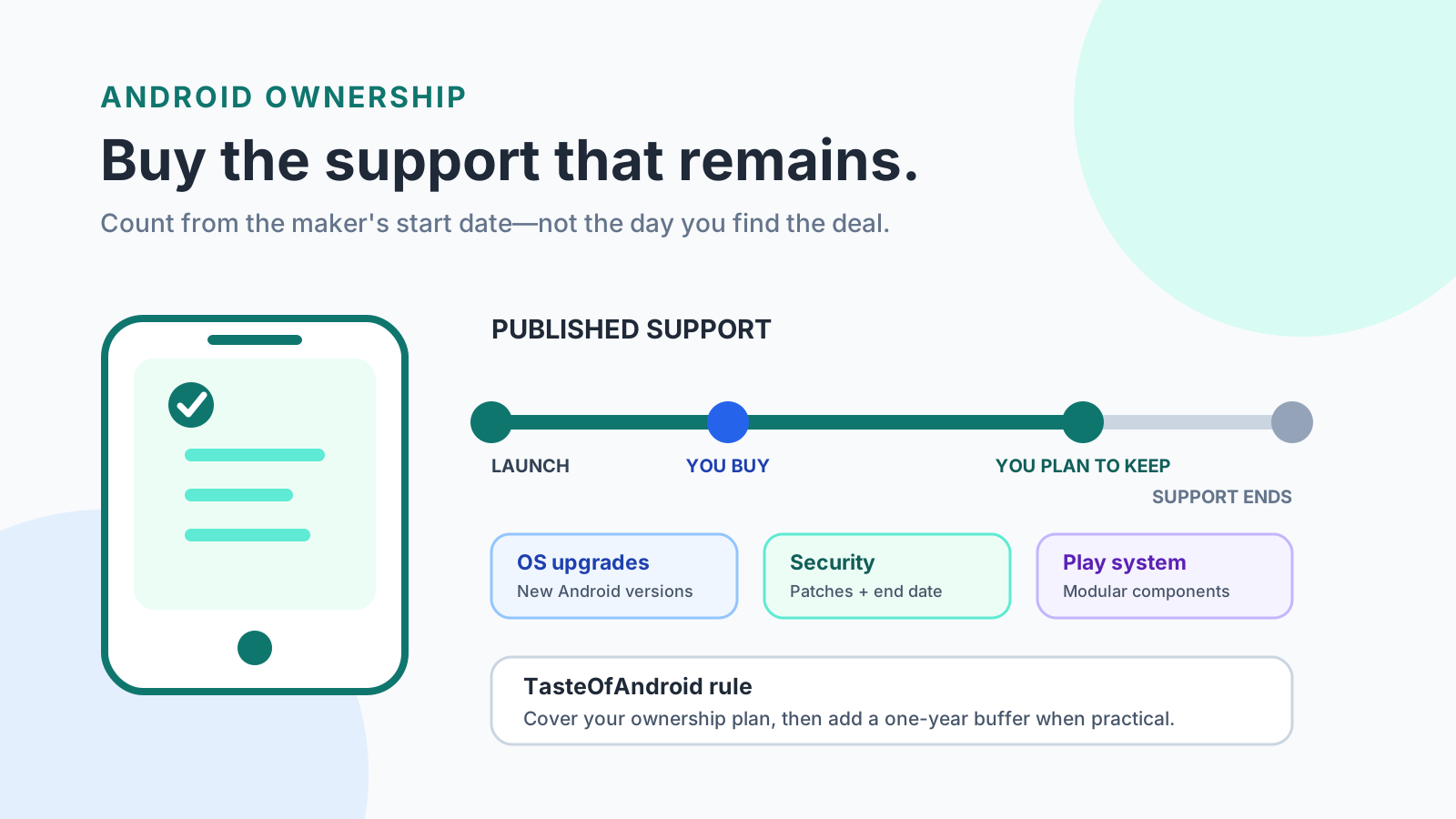
Support that ends before you replace the phone can leave part of your ownership without documented security maintenance. Choose an exact model whose published security-support end date covers your plan; an extra year is TasteOfAndroid’s editorial buffer, not a manufacturer requirement. Count from the maker’s published start point, not your purchase date.
Key takeaways
- Judge a phone by its remaining support, not only the advertised number of years.
- Keep OS upgrades, manufacturer security updates, Google Play system updates, feature releases, and app updates separate.
- Verify the exact model, market, support start point, security end date, and update cadence before buying.
Manufacturer policy examples below retain their August 4, 2026 source-check date; recheck the exact model before buying.
Scroll horizontally to view all table columns.
| Device or policy | Market or scope | Published clock or reference | Officially documented coverage |
|---|---|---|---|
| Pixel 10[1], under the Pixel 8-and-later policy | Google policy; rollout varies by device and operator | First US Google Store availability | Seven years of OS and security updates; Pixel Drops are separate |
| Galaxy S26 series[2] | Global launch policy | Global launch | Seven OS generations and seven years of security updates |
| Fairphone (Gen. 6)[4] | Official Fairphone support | The cited pages do not state one universal start point | Support through 2033; at least seven Android upgrades; monthly security updates for about three years, then bi-monthly from June 2028 to the end of support |
| OnePlus 15[5] | UK security policy only | Not stated on the cited page | Security-support end date of November 13, 2031; regional variation noted; no OS-upgrade count stated there |
| motorola edge 70[6] | EMEA page; region and channel differences apply | Page reports an October 2025 launch | Security updates through June 2031, at least bi-monthly |
| Xiaomi phones[7] | Global general policy, not a model promise | First shipment | Typically at least two years of security updates; three years or longer for some models; check the exact model and EOL list |
Open the full-size overview diagram.
What does Android update support actually mean?
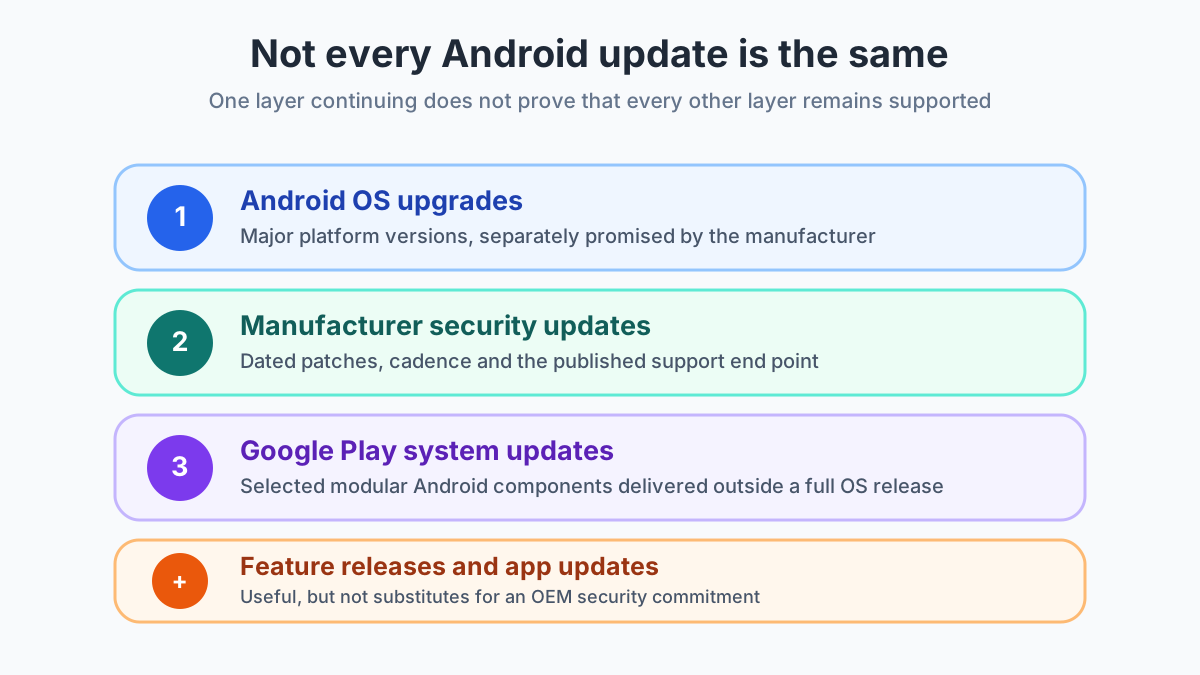
“Android update support” is an umbrella term. Android Help[9] shows the Android version, Android security update, Google Play system update, and build number separately because they describe different parts of the software.
Android OS upgrades
OS upgrades move a phone to a newer major Android release. A manufacturer may promise a number of Android versions or “generations,” while another describes support in years. Those are related, but they are not identical commitments.
Manufacturer security updates
Security updates address disclosed vulnerabilities in Android and device-specific software. The security patch level in Settings records which published fixes have been applied. It shows what is installed now, not how long future updates will continue.
Google Play system updates and Mainline
Android Mainline[11] lets selected system components update outside a full Android release through Google Play system updates or a partner’s over-the-air mechanism. That does not prove that the complete OS, firmware, or manufacturer software remains supported.
Feature releases and app updates
Feature releases such as Pixel Drops are separate from Google’s OS and security commitment. App-store updates belong to individual apps. Receiving one kind of update does not mean every other layer is still supported.
When does the support clock start?
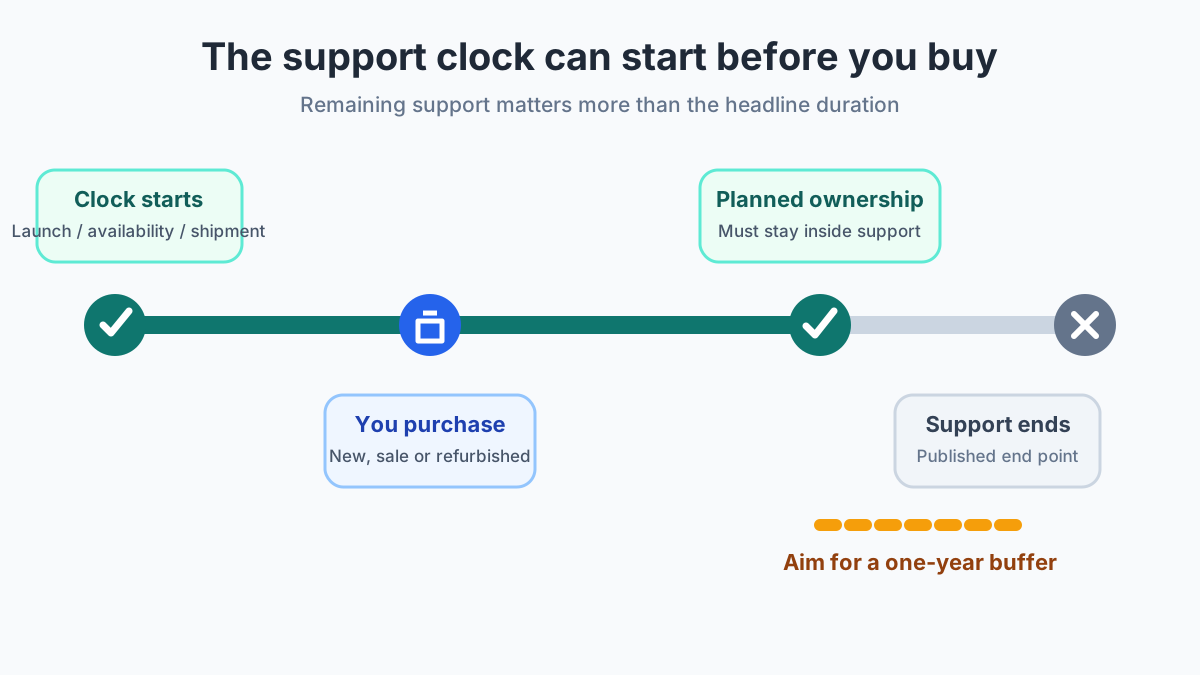
Do not assume support begins on your purchase date. Google starts its Pixel 8 and later policy from each model’s first availability on the US Google Store. Samsung starts the Galaxy S26 policy from the series’ global launch. Xiaomi’s general security policy refers to first shipment. Each maker can define a different starting point.
That makes remaining support more useful than the headline duration. A phone discounted two years after launch may still fit your needs, but part of its support window may already be gone. Ask: “Will official security support last through the years I expect to use this phone?”
Record the manufacturer’s start point, your purchase date, replacement date and support end date. Remaining support begins at purchase; the optional one-year editorial cushion goes beyond replacement.
How many years of support do you need?
The answer follows your ownership plan, not a universal number.
- Buying new: compare the full documented window with how long you normally keep a phone.
- Buying on sale: subtract the time already passed since the maker’s stated start point.
- Buying refurbished: verify the exact model and regional variant before calculating what remains.
- Keeping your current phone: compare its published security end date with your realistic replacement date, then check its Android version, security patch level, and Google Play system update separately.
TasteOfAndroid editorial judgment: published security support should cover your planned ownership, with about one extra year of buffer when practical. That buffer is guidance, not an industry rule.
Seven years is now a credible benchmark for a new flagship because several current product families document support at that scale. It is not a legal requirement or the only rational choice. A shorter commitment can make sense when it still covers your planned use and the price trade-off is clear.
Does a long promise mean identical update delivery?
No. Keep six ideas separate:
- Support duration: how long updates are documented.
- Rollout timing: when one update reaches your phone.
- Cadence: monthly, bi-monthly, or another published schedule.
- Patch level: the dated set of security fixes currently installed.
- Support end date: when the documented commitment ends.
- Feature availability: which optional features reach a model or market.
Google says Pixel rollouts depend on the device and operator. Fairphone publishes a cadence change during its support period, while Motorola documents at least bi-monthly security maintenance for the cited EMEA model. A long duration does not promise identical monthly delivery everywhere.
The June 2026 Android Security Bulletin[10]
also distinguishes 2026-06-01 and 2026-06-05 patch levels because they
cover different sets of fixes. A patch level shows what has been applied; it
does not reveal how many future years remain.
Keep OS upgrades, manufacturer security patches, Google Play system updates, and feature/app updates separate. Continued updates in one layer do not establish support for all the others.
How to verify support for an exact phone
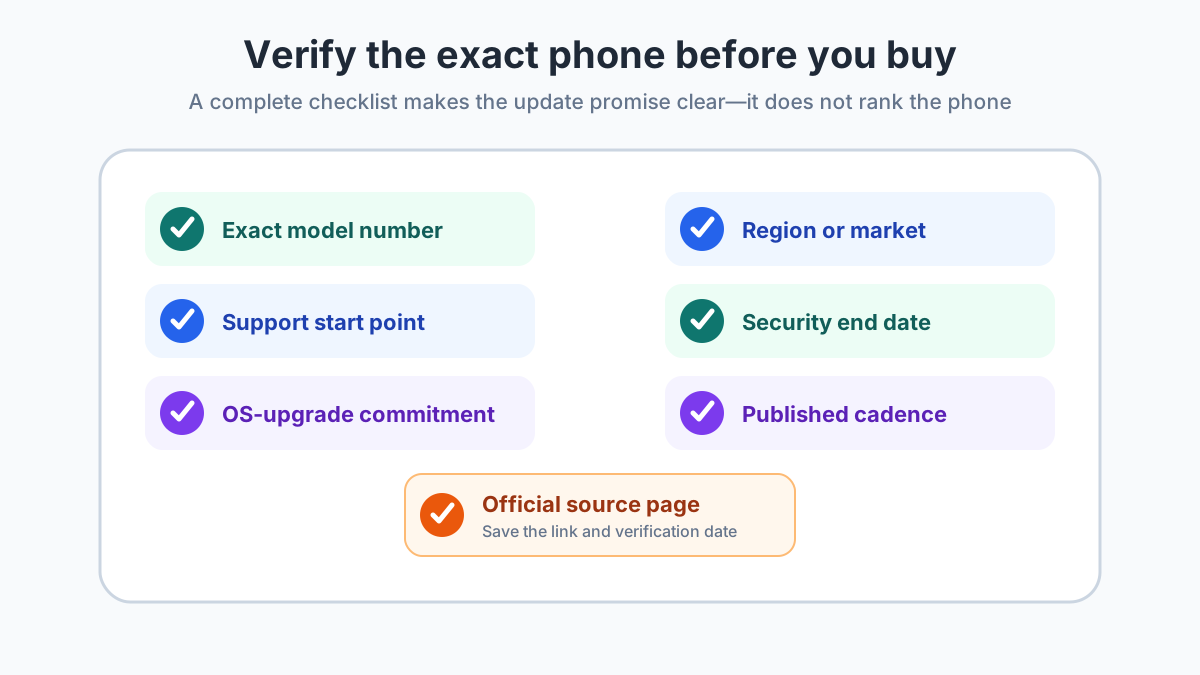
Brand-level slogans are a starting point, not a purchase decision. Check:
Copy this record into a note; leave unconfirmed fields marked unknown.
Scroll horizontally to view all table columns.
| Field | Your record |
|---|---|
| Exact model and regional/carrier variant | ___ |
| Manufacturer-defined start point | ___ |
| Purchase date | ___ |
| Published security-support end date | ___ |
| Planned replacement date | ___ |
| Remaining support at purchase | End date − purchase date: ___ |
| Support margin beyond replacement | End date − replacement date: ___ |
| Editorial buffer target | About one year beyond replacement, when practical |
| OS-upgrade commitment and cadence | ___ |
| Official source and date checked | ___ |
Keep remaining support separate from the optional buffer. A negative support margin means the published window ends before your plan; a positive margin below one year covers the plan but misses our preferred editorial cushion.
If one item cannot be confirmed, label it unknown. Do not assume every phone from the same brand follows the same policy. Completing the checklist makes the update promise documented and comparable; it does not guarantee that the phone is a good buy.
Save the exact model, region, support start, security end date, OS-upgrade commitment, cadence, official source and check date. Unknown fields stay unknown.
TasteOfAndroid’s buying rule
People keeping a phone for years, or comparing a new model with a discounted or refurbished alternative.
A shorter policy can fit a lower price, but only when the remaining security window still covers your plan.
Avoid a phone whose support ends before your ownership plan, or whose exact policy cannot be verified.
The TasteOfAndroid Take
Do not chase the longest headline promise in isolation. Match remaining Android update support to your ownership timeline, then judge the rest of the phone. Before paying, verify the exact model, region, start point, security end date, OS-upgrade commitment, and cadence on the manufacturer’s official page. Continue comparing the remaining trade-offs when you are ready. If you are considering an imported phone, use our Global Version vs China Version guide to confirm that the policy applies to your exact market variant. Revisit our Android Updates coverage for future policy changes.
Conditions to recheck
- Policy pages can change; the facts above were checked on August 4, 2026.
- Delivery timing and feature availability can vary by model, market, carrier, and channel even when the duration is documented.
- Xiaomi’s cited policy is a general floor, not a model-specific promise.
- The OnePlus 15 example is a UK security end date only; no OS-upgrade count or start point is inferred from that page.
Frequently Asked Questions
Does Android update support start when I buy the phone?
Do not assume it does. Manufacturers may measure support from launch, first availability, first shipment or another documented reference point. Check the policy for the exact model and market.
Are Android security updates more important than OS upgrades?
They serve different purposes. For ownership planning, the published security-support end date is the clearest baseline for how long security maintenance is officially documented.
Do Google Play system updates replace manufacturer support?
No. Google Play system updates cover selected modular components. They do not replace support for the complete operating system, device firmware or manufacturer software.
Can a refurbished Android phone still be a good buy?
Yes, when its remaining documented support covers how long you plan to keep it and you have verified the exact model, region and policy.
What does the Android security patch level tell me?
It identifies the published security patch level installed on the phone. It does not, by itself, reveal how long the manufacturer will keep supporting that model.
Sources & methodology12 sources
Evidence used for this article. Links open the original source in a new tab.
- Learn when you'll get software updates on Google Pixel phones — Google Pixel Help
- Samsung Unveils Galaxy S26 Series — Samsung Global Newsroom
- The Fairphone (Gen. 6) — Fairphone
- Fairphone's Operating System — Fairphone Support
- Product Security Update Period — OnePlus UK
- Android Security Updates for motorola edge 70 — Motorola Support EMEA
- Xiaomi Product Support Policy Overview — Xiaomi Global Support
- Security updates for smartphones and tablets — Xiaomi Security Center
- Check and update your Android version — Android Help
- Android Security Bulletin — June 2026 — Android Open Source Project
- Mainline — Android Open Source Project
- Android Enterprise Recommended requirements — Android Enterprise