
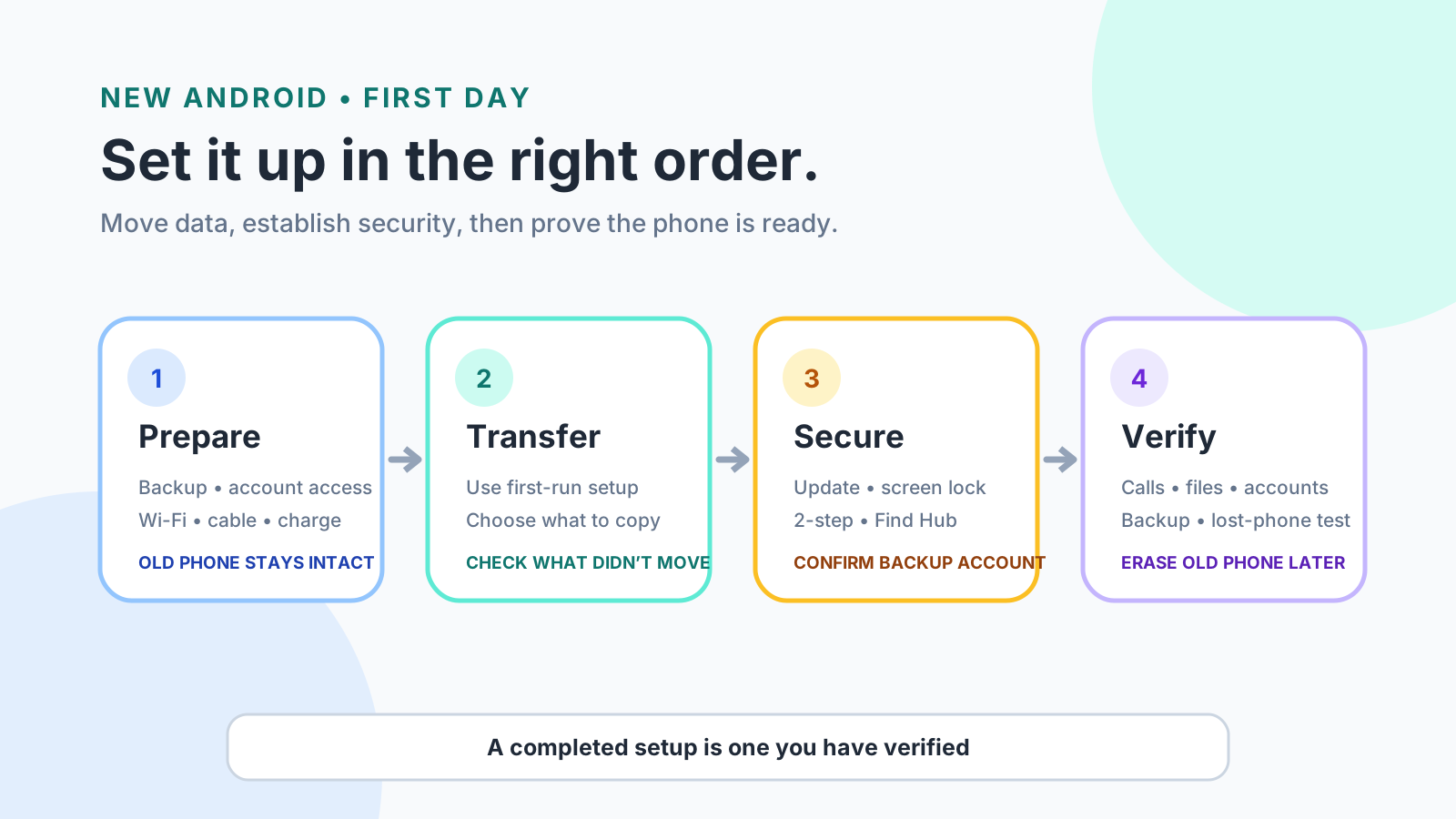
Erasing the old phone too soon can strand data or account access. Set up the new Android phone in this order: prepare the old phone and account access, transfer during first-run setup, verify critical data, install updates, secure the device and accounts, confirm backups, review privacy and alerts, then test the new phone before erasing the old one.
Key takeaways
- Prepare account access, power, connectivity and the old phone before starting.
- Treat one-time device transfer and ongoing cloud backup as separate systems.
- Keep the old phone intact until data, accounts, connectivity and recovery all pass verification.
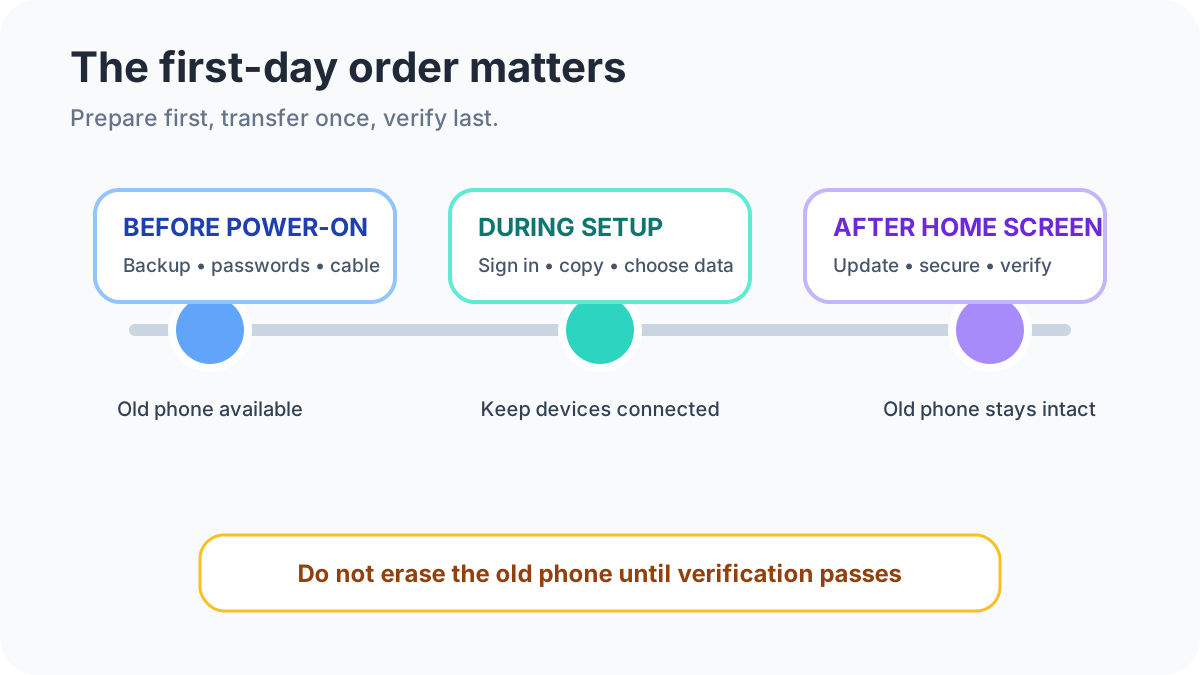
- Prepare account access and a backup before starting the copy.
- Transfer, verify data and accounts, then configure updates, security and ongoing backup.
- Keep the old phone intact until the final checks pass.
1. Prepare before powering on the new phone
Charge both phones, connect the old one to power if necessary, and make sure you know its screen-lock credential. Confirm that you can sign in to the Google Account intended for the new phone. Check its recovery methods and 2-Step Verification[5] before migration, especially if approval prompts or codes currently arrive on the old device.
Prepare reliable Wi-Fi, a compatible cable if using wired transfer, a SIM tool when required, and the carrier information needed for SIM or eSIM activation. Run a recent backup on the old phone, but do not treat that as proof that every app or file is protected. Keep the old phone signed in, connected and available as your reference device.
2. Transfer during first-run setup when possible
Android’s official copy process[1] supports cable or Wi-Fi on eligible devices. Google recommends doing the copy during setup because that opportunity can be one-time or limited later. Exact choices depend on the two phones, their Android versions and any organization managing either device.
During first-run setup, select language and accessibility preferences, connect to Wi-Fi, activate the SIM or eSIM where supported, sign in with the intended Google Account, and choose what to copy. Keep both phones powered and connected until the process says it is complete.
A device-to-device transfer moves available information during migration. Ongoing cloud backup protects selected categories for future recovery. They are not interchangeable, and completing one does not prove the other is working.
Google explicitly warns that some content may not copy. Plan to verify downloads, hidden folders, non-Play apps, app-specific data, non-Google accounts and offline media separately. The same applies to authenticator codes, passkeys, password-manager access, banking apps and work apps. Never assume a completed transfer screen covers these items.
3. Verify the transferred data while both phones still work
Compare the new phone with the old one. Check contacts, messages, photos, videos, documents, downloads and calendar entries. Open several recent files instead of only confirming that folders exist. Test password-manager and authenticator access, then sign in to critical messaging, banking, payment and work apps.
Some apps restore settings but require a fresh login. Others keep data in their own account or backup system. Work profiles and managed phones can impose extra restrictions. If an account depends on a code, passkey or credential still held only by the old phone, resolve that dependency now.
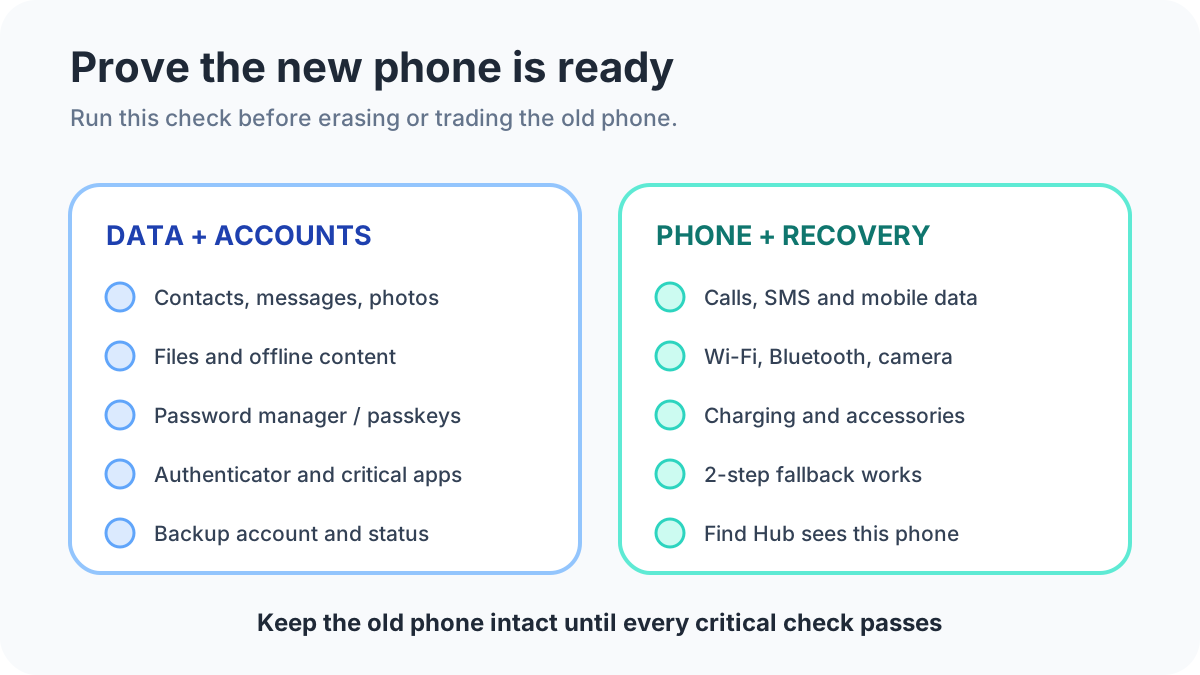
- Data: open important files and compare contacts and messages.
- Accounts: test sign-in, passkeys and authenticator access.
- Connectivity: test calls, messages, mobile data and accessories.
- Backup and recovery: verify completion and Find Hub visibility.
4. Install system and app updates
A newly opened phone may not contain the latest software available for its model. Android Help[9] lists the Android version, Android security update and Google Play system update separately. Check each, then update apps through Google Play[10] or the phone’s supported app store.
Update locations vary across Pixel, Samsung, OnePlus, Xiaomi, Motorola and other devices. Follow the manufacturer’s documentation when the general Android categories do not match. Our Android update-support guide explains how these update layers differ over the phone’s longer life.
5. Build security from the fallback credential upward
Start with a strong screen-lock PIN or password. Add fingerprint or face unlock if supported, but treat biometrics as convenience layered on the fallback credential—not as its replacement. Confirm Google Account 2-Step Verification, recovery email and other recovery methods while both devices remain accessible.
Then verify that the phone appears in Find Hub[6]. Google says remote finding, securing or erasing depends on conditions including power, connectivity, Google Account state, Find Hub settings and Google Play visibility. Do not wait for a loss to discover that one condition is missing.
Android theft-protection features[7] are conditional. Some require a supported device, newer Android version and a screen lock. Enable the protections available on the exact phone, without assuming every feature or menu exists everywhere.
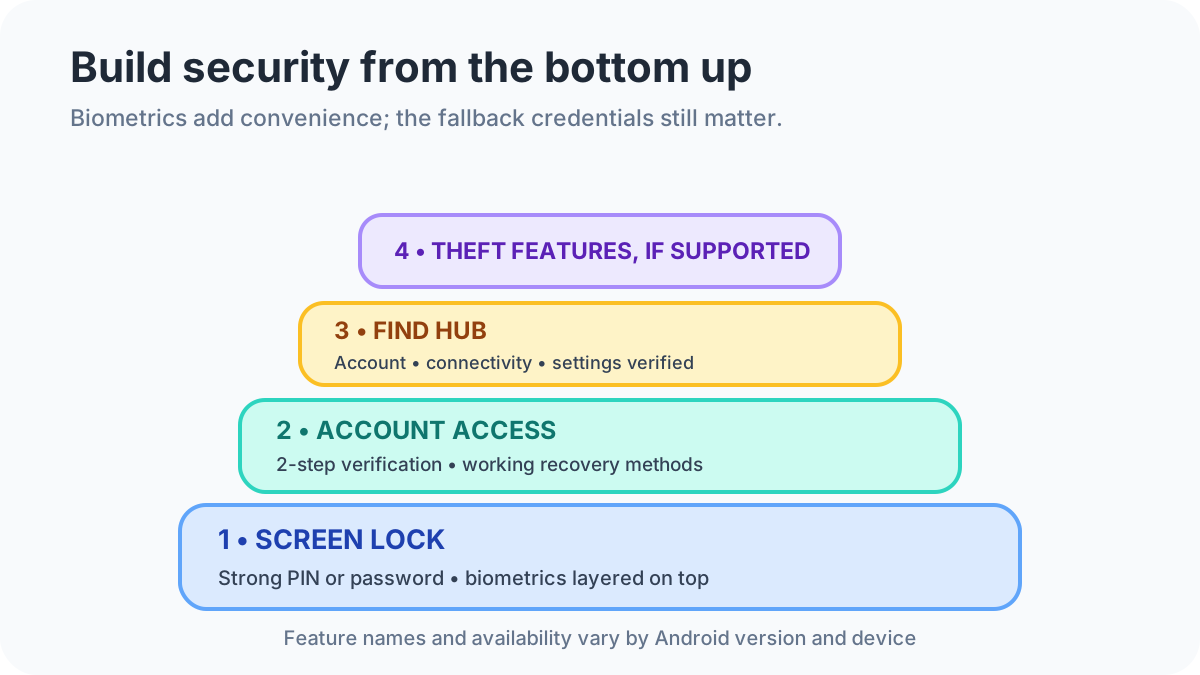
- Start with a screen-lock credential, then verify account recovery and 2-Step Verification.
- Check Find Hub visibility and the theft protections available on the exact device.
6. Confirm backup separately from the transfer
Use our photos, messages and authenticator backup guide to separate device backup from app-specific recovery. Review the selected Google Account, enabled backup categories and the latest backup status on the new phone. Check Google Photos separately if you use it, along with any third-party app that maintains its own backup.
Google’s backup guidance[3] says not every app backs up or restores all of its settings and data. Restoring a backup from a higher Android version onto a phone running a lower version may also be incomplete. A backup can take up to 24 hours, so a setup completed minutes ago may not yet show a finished result. Wait for a confirmed status; do not infer success from the toggle alone.
7. Review privacy, notifications and battery cautiously
Use Privacy Dashboard where available to see recent access to sensitive data, then review app permissions[11] for the camera, microphone, location and other categories. Grant access based on what an app genuinely needs. Paths and history windows vary by Android version and manufacturer.
Browse more step-by-step material in our How-To category. For notifications, use the phone normally before making broad changes. Reduce unnecessary alerts gradually while preserving security warnings, authenticator prompts, backup status and important messages. Android’s notification controls[12] can vary by device and version.
Apply the same restraint to battery settings. Do not disable critical apps, broadly block background activity or use aggressive optimization without understanding the consequence. A quieter phone is not correctly configured if it delays authentication, backup, messaging or safety alerts.
8. Pass the final readiness check before erasing the old phone
Test calls, SMS, mobile data, Wi-Fi, Bluetooth, camera and charging. Confirm that critical accounts open, passwords and passkeys are available, authenticator codes work, recent files can be read, backup has completed and Find Hub sees the new phone. Configure emergency information where supported.
Copy this five-category acceptance record, filling the result and date for each item. Data and account-transfer checks above remain prerequisites.
Keep the old phone intact if any important result remains unknown. After every critical check passes, follow the manufacturer’s and account provider’s sign-out and reset instructions before selling, trading or recycling it.
Use the before-selling privacy checklist for sign-out, reset and SIM or storage handling after verification passes.
Conditions to recheck
Recheck Android and manufacturer documentation for the exact devices and software versions, SIM or eSIM support, transfer compatibility, managed-device restrictions, app-specific backup behavior, and current Find Hub or theft protection availability.
Sources
The official Android and Google references used in this guide are listed in the source panel below. They were checked on August 4, 2026. The acceptance record and backup/retirement reading steps were revised on October 8, 2026. Because setup flows and security features change, confirm current instructions for the exact phone and Android version before relying on a menu path.
Frequently Asked Questions
Should I transfer data during setup or afterward?
Transfer during first-run setup whenever possible. Android's built-in migration flow is designed for that stage, while later transfer options may be limited or unavailable.
Does Android backup restore every app completely?
No. Backup and restore depend on the Android version, device and app. Some apps require a fresh sign-in or use a separate backup process.
Can fingerprint or face unlock replace my PIN or password?
No. Biometrics add convenience, but the fallback screen-lock credential remains essential for security and recovery.
Should I disable notifications immediately on a new phone?
No. Use the phone normally first, then reduce unnecessary alerts while keeping security, messaging, authentication and backup notifications reliable.
When is it safe to erase my old phone?
Only after you verify important data, accounts, apps, connectivity, backups and recovery features on the new phone.
Sources & methodology12 sources
Evidence used for this article. Links open the original source in a new tab.
- Copy apps and data from an Android to a new Android device — Android Help
- Switch to a new Android device — Android Help
- Back up or restore data on your Android device — Android Help
- Copy data with Google Play services — Android Help
- Turn on 2-Step Verification — Google Account Help
- Find, secure, or erase a lost Android device — Android Help
- Protect your personal data against theft — Android Help
- Check if your Android camera or microphone is on or off — Android Help
- Check and update your Android version — Android Help
- How to update apps on Android — Google Play Help
- Change app permissions on your Android phone — Android Help
- Control notifications on Android — Android Help
Related Articles
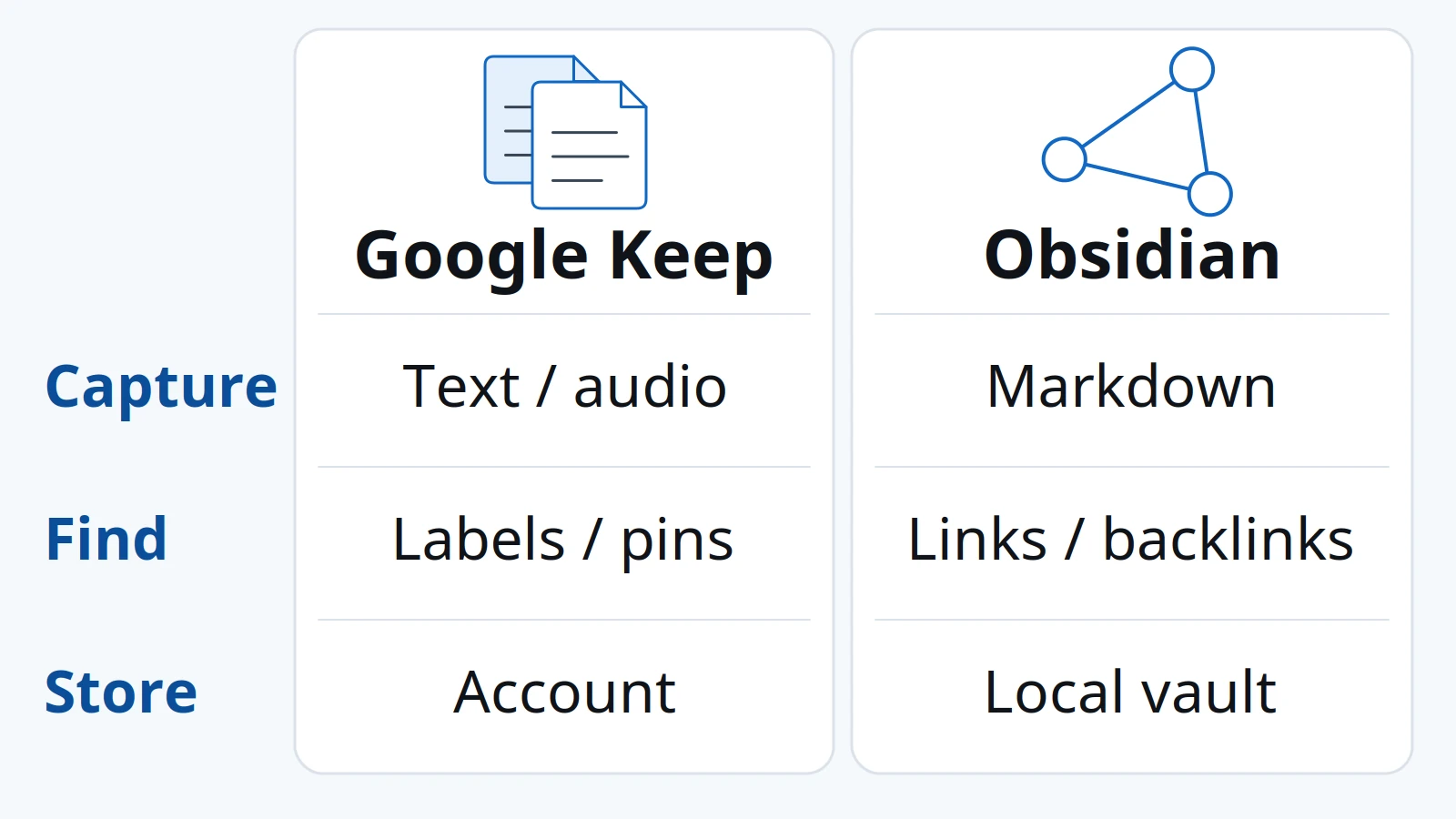
Obsidian vs Google Keep: Which Fits Your Android Notes?
Compare Google Keep's quick capture with Obsidian's linked Markdown notes on Android. Check sync, sharing, backup and migration before choosing a workflow.
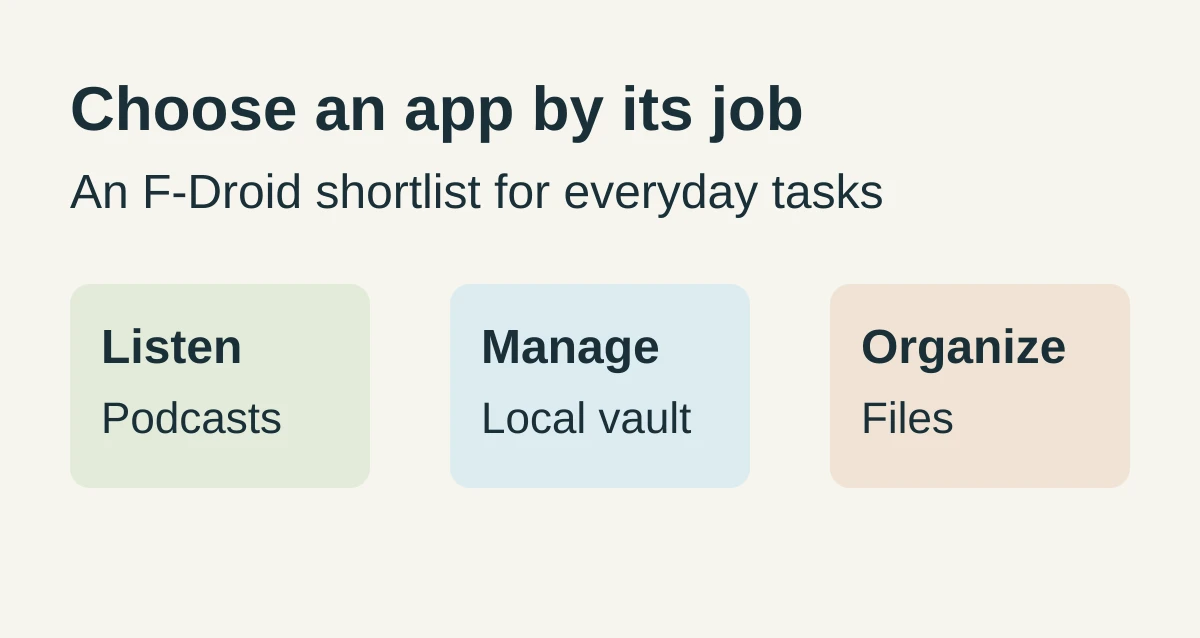
Three F-Droid Apps Worth Trying: Podcasts, Passwords and Files
Podcasts: AntennaPod; local vault: KeePassDX; files: Fossify File Manager. Check package IDs, permissions, updates and a restore before replacing an app.
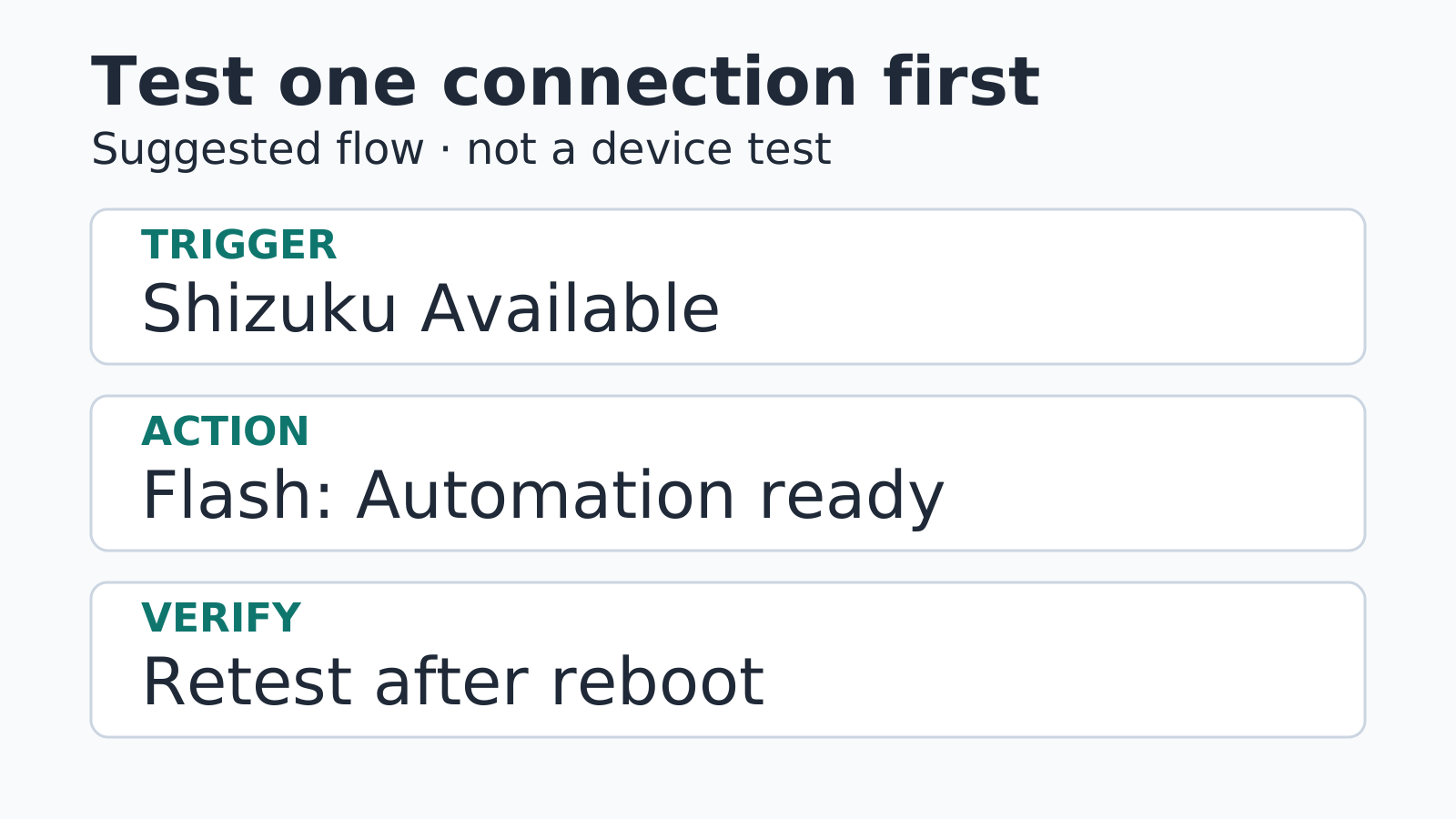
Ultimate Android Productivity and Essential Apps Guide
Start with one capture app, one notes store and a checked backup. Test sync and permissions before migrating; add Tasker automation or a supported external display only when needed.