
Contents
- What Is PWM Dimming in a Smartphone?
- Duty Cycle Examples and Brightness Scaling
- Is PWM Dimming Bad for Your Eyes?
- Clinical Evidence and Frequency Risk Thresholds
- What Is the Disadvantage of PWM Dimming?
- PWM Dimming vs DC Dimming: How Do They Differ?
- Which Phones Have High PWM Dimming or DC Dimming?
- What Does PWM Dimming Mean on a Phone Spec Sheet?
- Five-Point Display Dimming Checklist for Flicker-Sensitive Buyers
- Frequently Asked Questions
- What is PWM dimming on an OLED phone screen?
- Why does PWM dimming feel worse at low brightness?
- What PWM frequency is considered safe or flicker-free?
- Is DC dimming always completely flicker-free on OLED phones?
- Can you test a smartphone’s PWM flicker with another phone’s camera?
- Sources
Pulse-width modulation (PWM) dimming reduces smartphone OLED screen brightness by switching display power rapidly between zero and full rated output while varying the percentage of on-time within each cycle. Shortening the on-time—called lowering the duty cycle—dims average perceived brightness without lowering peak drive current, though longer dark off-intervals at low frequencies can trigger eye fatigue.
Because OLED subpixels switch in fractions of a millisecond, any rectangular current modulation from the display driver translates directly into rapid light pulses rather than fading smoothly between cycles. Understanding how switching frequency, duty cycle, and constant-current DC dimming interact helps shoppers evaluate display comfort alongside our other Android phone buying guides.
What Is PWM Dimming in a Smartphone?
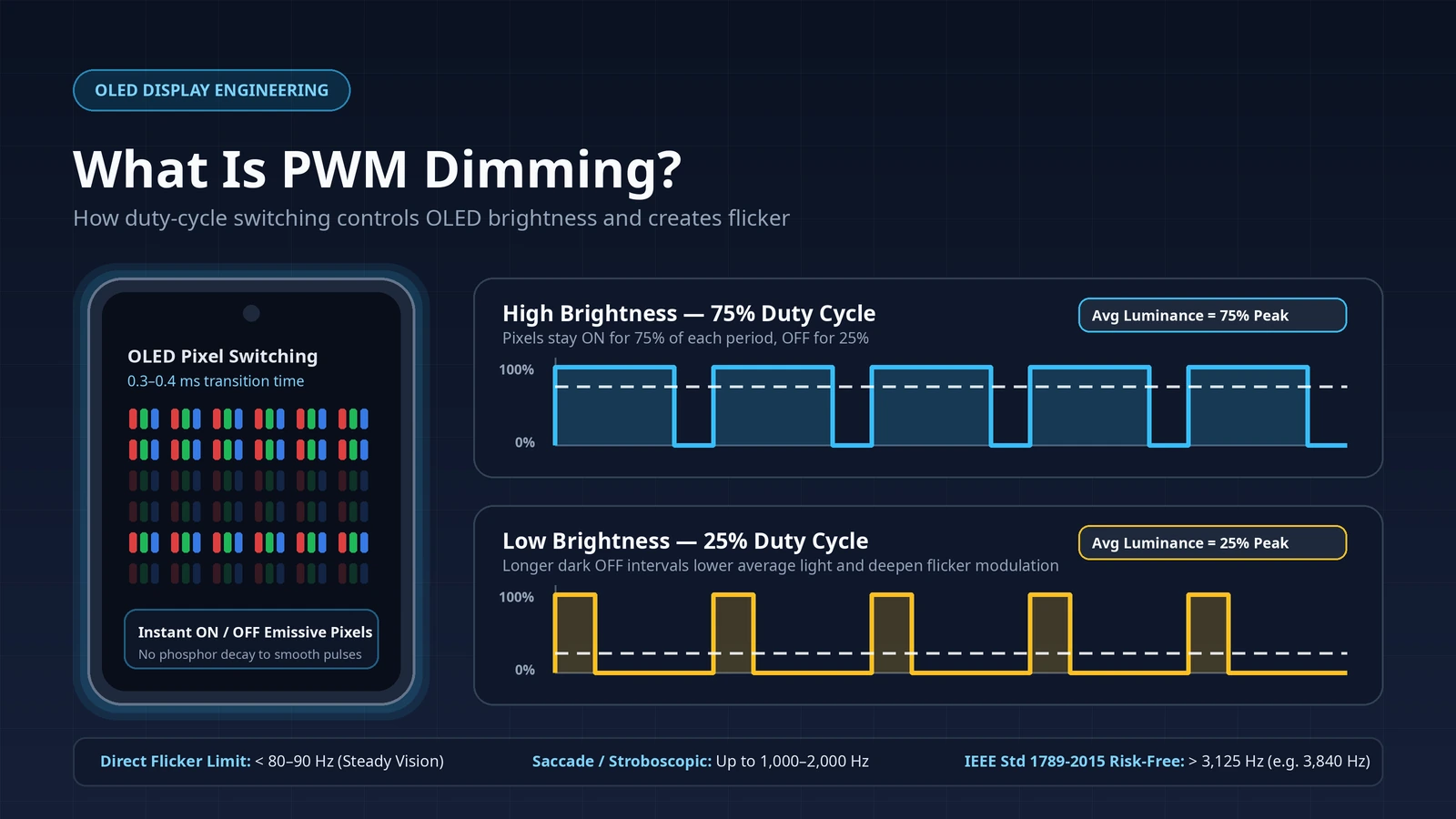
In a smartphone OLED display, PWM dimming represents brightness as a rectangular pulse wave whose switching frequency sets how fast each on-and-off cycle repeats and whose duty cycle sets the percentage of time pixels emit light. When the off-state equals zero, average luminance scales directly with duty cycle multiplied by peak output.
Pulse-width modulation (PWM)—also known as pulse-duration modulation (PDM) or pulse-length modulation (PLM)—controls average voltage and current delivered to a load by switching supply power between 0 and 100% faster than the load changes significantly; as noted in a peer-reviewed LED modulation study on PMC, LED dimming drivers typically rely on a periodic PWM signal governed by IEEE 1789-2015 frequency and modulation-depth health zones. In LED driver engineering, uPowerTek explains that every emitter requires a rated current for peak output, so PWM switches current at high frequency between 0 and rated current, using the ratio of on-time to off-time to regulate brightness. Digital circuits generate PWM cleanly by comparing an incrementing counter against a reference threshold, varying duty cycle in discrete steps set by the counter resolution.
Human vision blends those rapid pulses into steady brightness through the Talbot-Plateau law examined in peer-reviewed critical flicker fusion research on PMC: once a flickering stimulus reaches the critical flicker fusion frequency (CFF), it is perceived as a continuous stimulus matching the brightness of a steady light with the same mean physical luminance, so prolonging dark intervals lowers perceived brightness. On modern OLED hardware, a peer-reviewed high-speed OLED characterization study on PMC measured OLED transition times of just 0.3 to 0.4 ms, allowing screens to reproduce near-ideal square-wave light pulses rather than sluggish transitions.
Duty Cycle Examples and Brightness Scaling
Duty cycle can vary from 0% to 100%, including intermediate levels such as 25%, 50%, and 75%. The table below maps duty cycle percentages to their switching waveform shape and resulting average luminance when the off-state drops to 0:
Scroll horizontally to view all table columns.
| Duty Cycle Setting | On-Time vs. Off-Time Balance | Waveform Behavior | Resulting Average Luminance (Zero Off-State) |
|---|---|---|---|
| 100% duty cycle | Continuously on with zero off-interval | Flat steady full-output supply | 100% of peak rated output |
| 75% duty cycle | More time in the on state than the off state (above 50%) | Wide rectangular pulses with brief dark gaps | 75% of peak rated output |
| 50% duty cycle | Equal on-time and off-time per switching period | Balanced square wave | 50% of peak rated output |
| 25% duty cycle | More time in the off state than the on state (below 50%) | Narrow pulses separated by longer dark gaps | 25% of peak rated output |
| 0% duty cycle | Off for the full switching period | Zero drive current | 0% light output |
Is PWM Dimming Bad for Your Eyes?
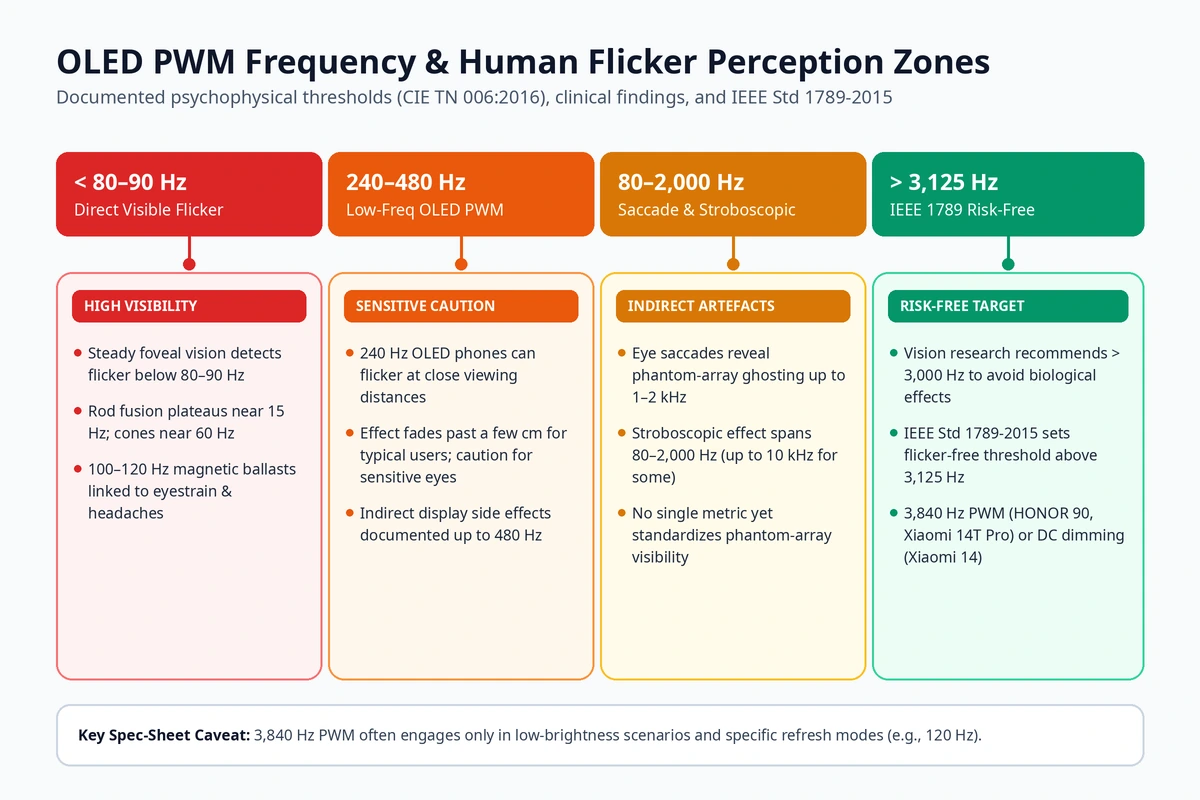
PWM dimming is rarely directly visible to steady central vision above 80 to 90 Hz, yet temporal light modulation can still trigger eye fatigue and headaches in sensitive viewers—particularly at 240 Hz during close-range viewing. Vision research and standards recommend frequencies above 3,000 to 3,125 Hz or DC dimming to minimize risk.
Psychophysical vision measurements show that steady foveal vision rarely detects flicker above 90 Hz, while visual saccades can detect temporal modulation up to or beyond 1 kHz. Under steady viewing, rod photoreceptors reach a maximal fusion plateau near 15 Hz and cone photoreceptors reach a plateau of about 60 Hz only at very high illumination. Because the flicker fusion threshold is statistical—defined as the frequency where flicker is detected on 50% of trials—and rises with both average brightness and modulation depth, susceptibility varies widely across individuals; a peer-reviewed visual discomfort review on PMC notes that individual sensitivity to phantom-array flicker reflects large differences in saccade velocity and contrast sensitivity, and that the phantom array can interfere with reading by disrupting eye movements across text.
Clinical Evidence and Frequency Risk Thresholds
In an integrative review of digital eye strain published on PMC, researchers report that OLED smartphone displays using 240 Hz PWM may flicker at very close distances; although the effect fades quickly beyond a few centimetres for typical use, the review advises caution for sensitive individuals or unusually close viewing and recommends high refresh rates or DC dimming for sensitive users. Neurophysiological findings cited in the same review associate flicker exposure during visually demanding screen tasks with reduced occipital alpha power and visual strain. More broadly, documented adverse effects of temporal light modulation include annoyance, reduced task performance, visual fatigue, headache, and seizures in photosensitive individuals, mirroring classic eyestrain and headache links observed with 100 to 120 Hz magnetic-ballast fluorescent lighting.
Scroll horizontally to view all table columns.
| Frequency Band | Visual Phenomenon or Standard | Practical Impact on Smartphone Viewing |
|---|---|---|
| Up to 15 to 60 Hz | Rod (~15 Hz) and cone (~60 Hz) steady-viewing fusion plateaus | Severe direct flicker under normal viewing |
| Up to 80 to 90 Hz | Direct flicker limit for steady foveal vision in a static scene | Directly visible brightness unsteadiness |
| 100 to 120 Hz | Magnetic-ballast flicker band linked to headaches and eyestrain | Elevated risk of visual fatigue and attenuated EEG alpha power in sensitive viewers |
| 240 to 480 Hz | Close-range 240 Hz OLED smartphone PWM; indirect display side effects up to 480 Hz | Effect fades quickly beyond a few centimetres for typical use, though caution is advised for sensitive individuals |
| 80 to 2,000 Hz (up to 10,000 Hz for some) | Stroboscopic effect on moving objects and phantom-array ghosting during eye saccades (up to 2,000 Hz) | Indirect motion and saccade artefacts despite appearing steady under fixed gaze |
| Above 3,000 Hz / above 3,125 Hz | Vision-science biological guidance (>3,000 Hz) and IEEE Std 1789-2015 flicker-free threshold (>3,125 Hz) | Risk-free dimming benchmark used by TÜV Rheinland Flicker-Free certification |
What Is the Disadvantage of PWM Dimming?
The primary disadvantage of PWM dimming is that reducing screen brightness lengthens dark off-intervals and increases temporal light modulation, which fast-switching OLED panels transmit directly to the eye as indirect flicker artefacts and to camera sensors as rolling-shutter banding. Selecting too low a switching frequency produces noticeable oscillation rather than smooth luminance control.
As detailed in a peer-reviewed eye-tracking study of temporal light artefacts on PMC, the fast response time of solid-state light sources makes temporal light modulation far more prominent than on traditional lamps: solid-state LEDs do not inherently create flicker on their own, but because their response is so fast (0.3 to 0.4 ms on tested OLED panels without the phosphor persistence that smooths conventional lamps), they reproduce driver current ripples directly as light ripples, and phantom-array visibility increases when modulation frequency drops. Worse for bedtime phone readers, dimming regulators generally increase temporal light modulation at lower light levels, precisely when ambient room lighting is darkest.
The International Commission on Illumination (CIE) defines temporal light modulation (TLM) as fluctuation in luminous quantity or spectral distribution over time, and CIE TN 006:2016 classifies the resulting temporal light artefacts (TLAs) into three distinct effects:
- Direct flicker: Irritating brightness variation perceived by a static observer in a static environment, operating at frequencies up to 80 Hz.
- Stroboscopic effect: Distorted perception of moving or rotating objects under modulated light, typically occurring between 80 Hz and 2,000 Hz and extending up to 10,000 Hz for a subset of observers.
- Phantom array (ghosting) effect: Spatially separated ghost images seen during rapid eye saccades across a modulated light source in a static scene, perceptible up to 2,000 Hz and documented as indirect display artefacts at refresh rates as fast as 480 Hz.
A separate practical drawback is temporal light interference (TLI) on cameras: filming a PWM-dimmed screen with another smartphone or video camera often displays rolling dark vertical or horizontal bands. Because those bands depend heavily on the recording camera’s shutter type, frame rate, and internal processing, common smartphone cameras are not a valid objective instrument for measuring human-perceived flicker risk.
PWM Dimming vs DC Dimming: How Do They Differ?
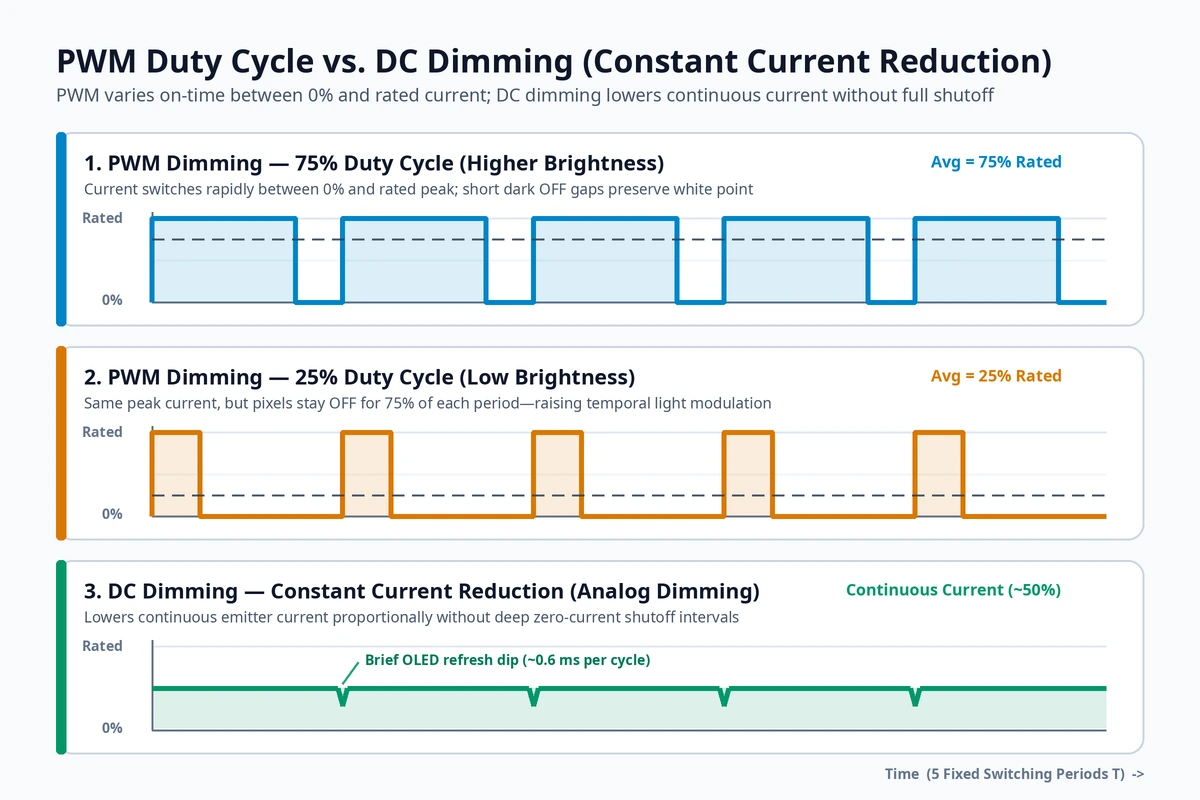
PWM dimming holds emitter peak current at its rated level and rapidly switches power on and off to preserve white-point consistency and high switching efficiency, whereas DC dimming—also known as constant current reduction (CCR) or analog dimming—lowers continuous current proportionally to reduce brightness without deep zero-current shutoff intervals.
Engineering references from uPowerTek identify constant current reduction (CCR) and pulse-width modulation (PWM) as the two primary LED dimming methods. Because a PWM switch passes practically zero current when off and drops almost zero voltage when on, switching power loss stays close to zero while digital controllers set exact duty cycles easily. Driving the emitter at rated current during every on-pulse also helps real PWM dimming preserve white-point consistency.
Constant current reduction avoids full on/off pulsing by reducing steady current through the diode, which explains why the PMC digital eye strain review highlights DC dimming alongside high refresh rates for flicker-sensitive users. Even on non-PWM sample-and-hold OLED panels, however, laboratory measurements on PMC show a typical brief temporal luminance dip lasting around 0.6 ms within each 240 Hz refresh cycle, and OLED organic materials remain vulnerable to thermal and electrical stress that can cause long-term burn-in or color shifts.
Scroll horizontally to view all table columns.
| Technical Dimension | PWM Dimming (Pulse-Width Modulation) | DC Dimming (Constant Current Reduction / Analog) |
|---|---|---|
| Brightness control mechanism | Rapidly switches current between 0 and rated current; duty cycle sets average brightness | Reduces continuous current moving through the emitter proportionally |
| Switching efficiency and control | Switching power loss stays close to zero; pairs directly with digital counter circuits | Continuous current regulation without full zero-current pulse switching |
| White-point behavior | Real PWM preserves LED white point by driving each pulse at rated current | Continuous current reduction avoids deep pulse shutoff; OLED organic layers still face long-term thermal/electrical color-shift risk |
| Low-brightness flicker profile | Shorter duty cycles widen dark gaps and raise temporal light modulation | Eliminates deep zero-current PWM cycles; OLEDs still exhibit a brief ~0.6 ms refresh dip per cycle |
| Suitability for sensitive eyes | Requires high frequency (above 3,125 Hz per IEEE Std 1789-2015) to meet risk-free levels | Recommended alongside high refresh rates in clinical digital eye strain guidance for sensitive users |
When deciding whether an older flagship OLED with lower-frequency dimming still makes sense against a newer mid-range handset that adds high-frequency PWM or DC dimming, weigh display comfort alongside battery age and update longevity in our new mid-range phone vs older flagship analysis.
Which Phones Have High PWM Dimming or DC Dimming?
Android smartphones split across three published dimming strategies: standard 240 Hz OLED PWM panels noted in clinical eye-strain literature, DC-dimmed LTPO AMOLED flagships such as the Xiaomi 14, and ultra-high-frequency 3,840 Hz PWM displays such as the HONOR 90 and Xiaomi 14T Pro that exceed IEEE Std 1789-2015’s 3,125 Hz flicker-free threshold.
Official manufacturer documentation reveals an important caveat hidden beneath headline numbers. According to HONOR Global Newsroom launch documentation, the HONOR 90 achieves TÜV Rheinland Flicker-Free certification under IEEE Std 1789-2015 (which defines the flicker-free level above 3,125 Hz) using 3,840 Hz PWM dimming—but that 3,840 Hz mode activates specifically in low-brightness scenarios and takes effect only when the refresh rate is set to 120 Hz. Xiaomi Global specifications similarly split approaches across models: the Xiaomi 14 pairs a 6.36-inch 1 to 120 Hz LTPO AMOLED display (1,000 nits HBM, 3,000 nits peak) with DC dimming and TÜV Rheinland Flicker Free certification, whereas the Xiaomi 14T Pro pairs a 144 Hz AMOLED display (4,000 nits peak) with up to 3,840 Hz PWM dimming and TÜV Rheinland Flicker Free certification.
Scroll horizontally to view all table columns.
| Smartphone / Display Tier | Published Panel Specs | Dimming Method & Frequency | Certification & Activation Conditions |
|---|---|---|---|
| Standard OLED PWM baseline (clinical review) | OLED smartphone display | 240 Hz PWM dimming | May flicker at very close distances; fades beyond a few cm for typical use; caution advised for sensitive users |
| Xiaomi 14 (Xiaomi Global specs) | 6.36-inch 1.5K LTPO AMOLED, dynamic 1 to 120 Hz, 1,000 nits HBM / 3,000 nits peak | DC dimming | TÜV Rheinland Flicker Free Certified |
| HONOR 90 (HONOR Global launch specs) | Smartphone display supporting 120 Hz refresh rate | Up to 3,840 Hz PWM dimming | TÜV Rheinland Flicker-Free certified under IEEE Std 1789-2015 (>3,125 Hz); active in low-brightness scenarios at 120 Hz only |
| Xiaomi 14T Pro (Xiaomi Global specs) | 144 Hz AMOLED, 4,000 nits peak brightness | Up to 3,840 Hz PWM dimming | TÜV Rheinland Flicker Free Certified |
If you are comparing Xiaomi’s display dimming options against competing Android ecosystems and regional software support, review our OnePlus vs Xiaomi software experience comparison.
What Does PWM Dimming Mean on a Phone Spec Sheet?
On a phone spec sheet, a PWM dimming rating states the maximum switching frequency in hertz used to pulse pixel current, but frequency alone cannot predict eye comfort without knowing modulation depth, waveform shape, duty cycle, brightness activation range, and whether the refresh rate locks out high-frequency mode.
Standards bodies emphasize that single summary figures oversimplify human flicker perception. Both CIE TN 006:2016 and IEC light-flicker guidance warn that standalone numbers such as Modulation Depth, Flicker Percentage, or Flicker Index cannot reliably predict perceived visibility because perception depends jointly on modulation depth, frequency, wave shape, and duty cycle. Objective laboratory testing instead relies on standardized weighted metrics:
- Short-term flicker indicator (PstLM): Defined in IEC TR 61547-1 using frequency-weighted filters and statistical processing; a PstLM value of 1.0 corresponds to the level where 50% of human test subjects judge flicker to be both noticeable and irritating.
- Stroboscopic effect visibility measure (SVM): Defined in IEC TR 63158 to evaluate stroboscopic visibility during movement and dimming.
- Phantom array measurement gap: No standardized objective metric has yet been defined for the phantom array effect during eye saccades.
Five-Point Display Dimming Checklist for Flicker-Sensitive Buyers
Use these five verification steps before choosing an OLED Android phone for low-light reading:
- Check whether the spec sheet lists DC dimming or PWM above 3,125 Hz: IEEE Std 1789-2015 defines the flicker-free risk-free level above 3,125 Hz, matching vision-science guidance above 3,000 Hz, while clinical eye-strain reviews recommend DC dimming or high refresh rates for sensitive viewers.
- Read footnotes for brightness and refresh-rate lockouts: Confirm whether headline 3,840 Hz PWM operates across your preferred display mode—for example, HONOR 90 enables 3,840 Hz PWM only in low-brightness scenarios and only at a 120 Hz refresh rate.
- Look for third-party flicker certification alongside raw Hz: Certifications such as TÜV Rheinland Flicker Free reference IEEE Std 1789-2015 correlation criteria rather than an isolated peak switching claim.
- Do not rely on a phone-camera shutter test in a retail store: Rolling dark bars visible through another smartphone camera reflect temporal light interference (TLI) driven by camera shutter and frame-rate settings rather than human flicker visibility.
- Account for viewing distance and ambient light if using 240 Hz OLED screens: Because 240 Hz OLED PWM flicker is most noticeable at very close viewing distances and lower brightness increases temporal light modulation, keeping comfortable viewing distance and avoiding extreme low-brightness dark-room reading helps reduce optical strain.
Frequently Asked Questions
What is PWM dimming on an OLED phone screen?
PWM (pulse-width modulation) dimming controls OLED screen brightness by rapidly switching pixel current between 0 and rated peak current while varying the duty cycle—the percentage of each cycle spent turned on. When the off-state is zero, average luminance equals duty cycle multiplied by peak output, and the human eye blends pulses above its flicker fusion threshold under the Talbot-Plateau law.
Why does PWM dimming feel worse at low brightness?
Lower screen brightness requires a shorter PWM duty cycle, meaning pixels spend more of each switching period turned off and temporal light modulation generally increases at lower light levels. Because OLED pixels transition in 0.3 to 0.4 ms without phosphor persistence, those wider dark off-intervals produce sharper light pulses.
What PWM frequency is considered safe or flicker-free?
Steady foveal vision rarely sees direct flicker above 80 to 90 Hz, yet eye saccades and moving objects can reveal phantom-array and stroboscopic artefacts up to 2,000 Hz. Vision-science guidance recommends frequencies above 3,000 Hz to avoid biological effects, and IEEE Std 1789-2015 sets the flicker-free risk-free threshold above 3,125 Hz.
Is DC dimming always completely flicker-free on OLED phones?
DC dimming (constant current reduction) lowers continuous emitter current proportionally rather than switching power all the way to zero, which clinical digital eye strain guidance recommends for sensitive users. However, even sample-and-hold OLED panels typically exhibit a brief luminance dip lasting around 0.6 ms within each 240 Hz refresh cycle.
Can you test a smartphone’s PWM flicker with another phone’s camera?
No. Vertical or horizontal dark bands seen through a smartphone or video camera are temporal light interference (TLI) determined by the recording camera’s shutter type, frame rate, and processing, so common cameras cannot objectively assess human-perceived temporal light artefacts.
Sources
- PMC10057144 — Exploring the Effects of LED-Based Visible Light Communication on Reading and Color Perception — IEEE 1789-2015 LED modulation frequency definitions, PWM dimming drivers, and critical, low-risk, and no-observable-effect-level (NOEL) health zones.
- PMC11277791 — An Arduino-Powered Device for the Study of White Perception beyond the Visual Chromatic Critical Flicker Fusion Frequency — Critical flicker fusion frequency (CFF) definition, PWM LED modulation, and the Talbot-Plateau law equating fused flicker brightness to mean physical luminance.
- PMC13307613 — A Cerebral Basis for Visual Discomfort and Visual Stress — Visual discomfort from temporal light modulation, phantom-array interference with eye movements across text during reading, and individual variation in saccade velocity and contrast sensitivity.
- PMC10354087 — Saccadic eye movement speed is related to variations in phantom array effect visibility — Temporal light modulation (TLM) prominence in fast solid-state emitters, TLA performance and fatigue impacts, duty-cycle and frequency influence on phantom-array visibility, and inverse frequency-visibility relationship.
- PMC12967517 — From the Ocular Surface to Neurophysiology: An Integrative Review of Digital Eye Strain — Close-distance flicker measurements on 240 Hz PWM OLED smartphone displays, occipital alpha power reduction during flicker exposure, and clinical recommendation for high refresh rates or DC dimming for sensitive users.
- PMC13161341 — Advantages and artifacts of high-speed OLED monitors for vision, eye-tracking, and EEG research — Measured 0.3 to 0.4 ms OLED pixel transition times, brief ~0.6 ms temporal luminance dip per 240 Hz refresh cycle, and organic material vulnerability to thermal/electrical stress causing burn-in or color shifts.
- CIE TN 006:2016, IEC TR 61547-1, IEC TR 63158, and IEEE Std 1789-2015 Technical Standards — Three TLA categories, PstLM light flickermeter (1.0 = 50% irritation threshold), SVM stroboscopic visibility measure, single-metric limits, and >3,125 Hz flicker-free dimming threshold.
- HONOR Global Newsroom (HONOR 90 Global Launch) — 3,840 Hz PWM dimming specification, TÜV Rheinland Flicker-Free certification referencing IEEE Std 1789-2015 (>3,125 Hz threshold), and low-brightness / 120 Hz activation footnotes.
- Xiaomi Global Specifications (Xiaomi 14 and Xiaomi 14T Pro) — 6.36-inch 1 to 120 Hz LTPO AMOLED with DC dimming (Xiaomi 14) and 144 Hz AMOLED with up to 3,840 Hz PWM dimming (Xiaomi 14T Pro), both TÜV Rheinland Flicker Free certified.
- uPowerTek LED Driver Technical Reference — Constant current reduction (CCR / analog dimming) vs PWM switching between 0 and rated current, 0% to 100% duty cycle examples (25% and 75%), and white-point preservation.
TasteOfAndroid is responsible for this page. The byline, method and commercial relationships are on the editorial policy and the author page.
Related Articles
Optical Zoom vs Digital Zoom: Phone Camera Differences
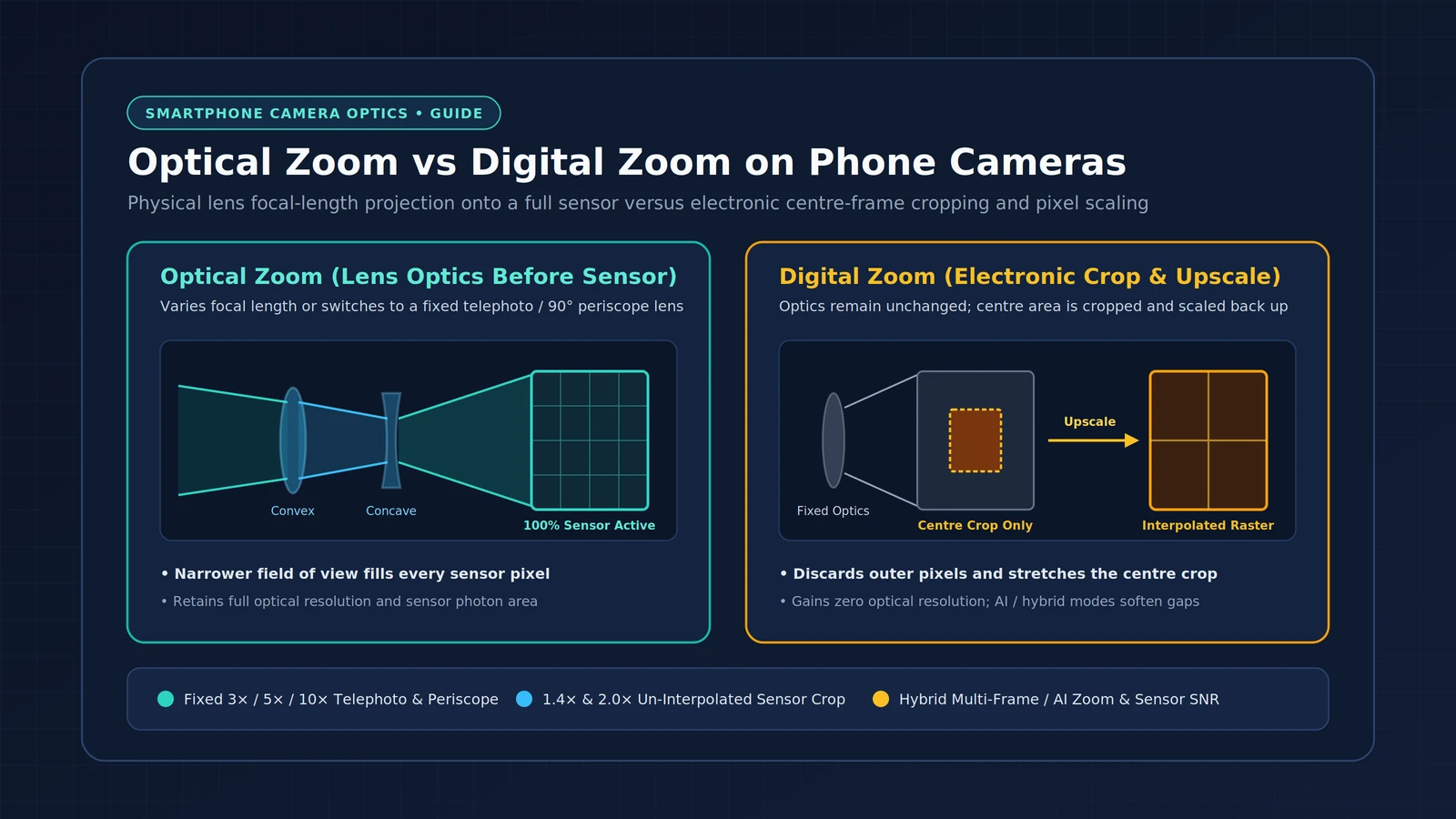
Optical zoom changes physical focal length across a phone's full camera sensor, while digital zoom crops and scales the centre of the captured frame.
Silicon-Carbon Battery Explained: Anode Design, Expansion, Cycle Limits, and Solid-State Differences
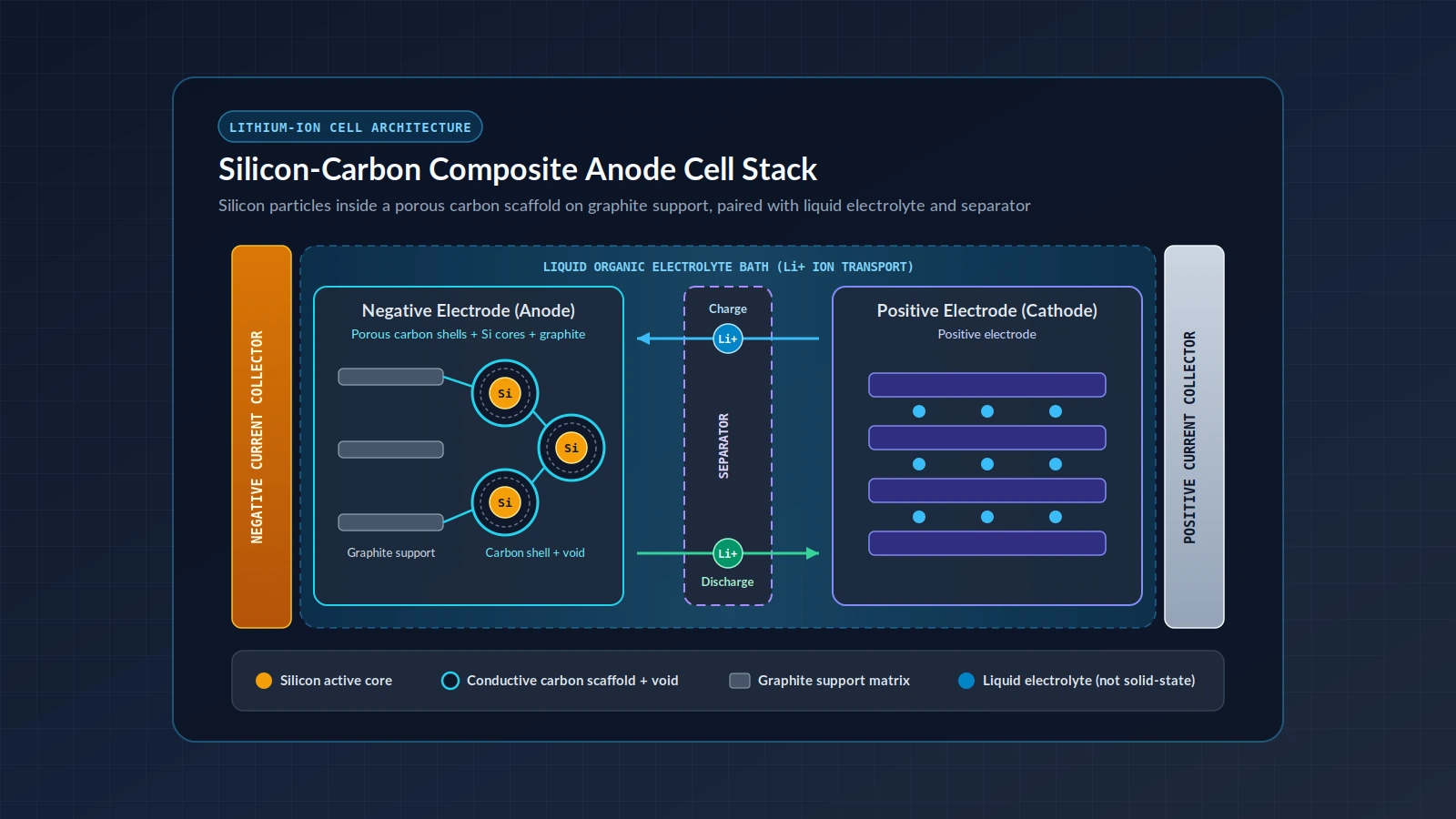
A silicon-carbon battery is a liquid-electrolyte lithium-ion cell that pairs silicon with carbon or graphite in the anode, not a solid-state battery.
Hearing-Aid Compatibility (HAC), ASHA, and Bluetooth LE Audio on Android
Certain Pixel phones stream media and calls directly to hearing aids over Android Audio Streaming for Hearing Aids (ASHA) or the Bluetooth SIG Hearing Access Profile (HAP).